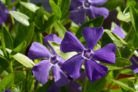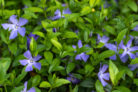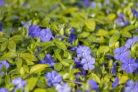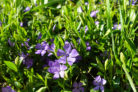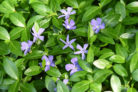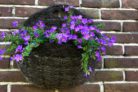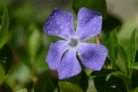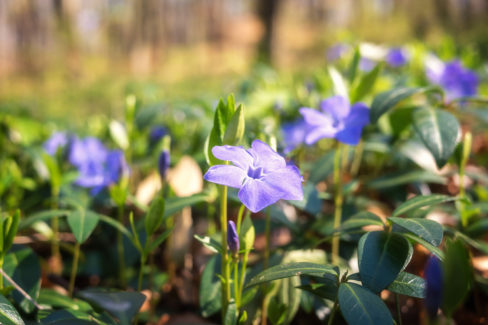
Evergreen and low-maintenance, *Vinca minor* (commonly known as Periwinkle or Creeping Myrtle) is a member of the dogbane family. While it’s a garden favorite, keep in mind that it is toxic to both humans and pets. Most plants in this family hail from the tropics, but *Vinca minor* is one of the hardy few that feels right at home in our cooler climates.
Soil and Light Preferences
Reaching a modest height of about 4 to 6 inches, this versatile plant is happy almost anywhere—whether it’s carpeting a slope, tucked under trees, or lining a garden wall. For the happiest plants, aim for soil that is rich in organic matter, loose, and consistently moist. While it’s pretty adaptable, it truly thrives in partial to full shade, where it will reward you with a stunning carpet of blooms. One thing it doesn’t love? Compacted soil. If your ground is feeling a bit hard, be sure to loosen it up well before planting.
A Natural Protector for Your Garden
Periwinkle is a fantastic “team player” in the garden. It’s excellent for providing much-needed shade for the roots of sensitive plants like Clematis. It also makes a beautiful underplanting for shrubs like Rhododendrons, Slender Deutzia, or hardy Azaleas.
The Perfect Ground Cover
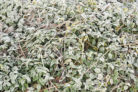
Whether you’re looking to fill a small patch or cover a large area, *Vinca minor* is a go-to choice, especially under deciduous trees and shrubs. Because it creates such a dense, durable mat, it’s also a popular pick for dry spots or as a low-maintenance option for cemetery plantings.
A Little History: Where Castles Once Stood
Originally native to Southern Europe and Asia Minor, *Vinca minor* has a bit of a romantic past. It was a staple in medieval castle gardens and early settlements as an ornamental plant. Over time, it escaped into the wild. In fact, if you’re hiking through the woods and stumble upon a patch of wild Periwinkle, there’s a good chance you’re standing near the site of an ancient settlement or a long-forgotten castle! Today, you’ll most often find it growing naturally in deciduous or mixed beech forests.
Fun Facts and Safety Tips
While it’s beautiful to look at, remember that every part of the Periwinkle plant is poisonous, so it should never be used as a DIY herbal remedy. However, it’s fascinating from a medical standpoint! The plant contains over 40 alkaloids, including vincamine. Today, a synthetic version of this compound is used in modern medicine to help treat leukemia by inhibiting the growth of certain white blood cells. In the world of homeopathy, it’s sometimes used to treat exhaustion, scalp issues, or specific women’s health concerns.