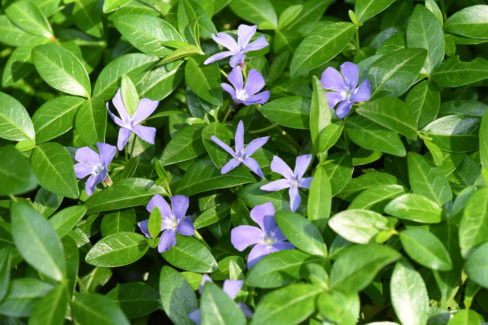
This popular evergreen groundcover really puts on a show in April and May when its colorful blossoms pop up. Since it loves partial to full shade, Periwinkle (Vinca minor) is the perfect choice for planting under trees or along a wooded garden edge. If you’re wondering whether you need to grab your garden shears, here’s the scoop on pruning.
To Prune or Not to Prune?
The short answer is: you can, but you don’t always have to. It really depends on how much space you’ve cleared for it. Because Vinca minor is such a vigorous grower, a little trim might become necessary to keep it from taking over. You’ll want to keep an eye on it so it doesn’t crowd out your other garden favorites, as planting too densely can stunt their growth. While tough plants like tulips can usually push through the carpet of flowers, smaller bulb plants might struggle to break through the thick foliage.
Post-Winter Cleanup
Generally, these shade-loving perennials are pretty low-maintenance and can go all year without a haircut. However, winter can sometimes leave the plants looking a bit yellow or with dried-out stems and leaves—often due to a lack of water. Once winter is over, it’s a good idea to snip away those old, tired bits with some garden shears. Not only does this keep your garden looking sharp, but it also helps revitalize the plant for the new season. To prevent winter damage in the future, make sure the soil gets enough water during the colder months. Just a heads-up: the plant is toxic if ingested, so I highly recommend wearing gloves whenever you’re pruning your Vinca.
Watering and Feeding Tips
If you’re growing Periwinkle in pots or containers on your balcony or patio, you’ll need to water them regularly. For those planted directly in the garden, watering isn’t usually a big chore unless you’re dealing with a major heatwave or a long dry spell. In those cases, a deep soak twice a week should do the trick. As for fertilizing, Vinca minor is pretty self-sufficient. If you’re planting it for the first time, you can give it a little “starter” fertilizer to get it going. Starting with fresh, nutrient-rich soil is the best way to ensure a lush bloom and healthy growth right from the start.