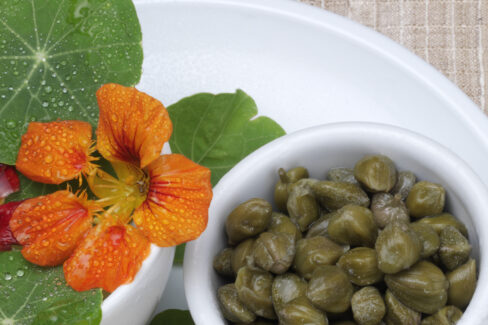
Nasturtiums aren’t just a pretty face in the garden; they’re also a total game-changer in the kitchen! While most people toss the fresh leaves and petals into salads, you can actually take their peppery flavor to the next level by pickling or infusing them.
Ways to Use Your Harvest
Aside from freezing, preserving nasturtiums in vinegar or oil is one of the best ways to keep your harvest going long after the first frost. The best part? Infusing them unlocks entirely new flavor profiles you just can’t get from the raw plant. Here are a few of my favorite ways to use preserved nasturtiums:
- “Poor Man’s” Capers
- Floral-infused vinegar
- Peppery blossom oil
Technically, you can preserve any part of the plant that grows above ground. But today, we’re going to focus on the real stars of the show: the buds, seeds, and blossoms.
“Poor Man’s” Capers
Don’t let the name fool you—calling these “fake capers” doesn’t do them justice. Pickled nasturtium seeds and buds have a unique, spicy kick that is way more exciting than your standard store-bought caper. To make them, harvest unopened buds or green, unripe seeds. Simmer them in a mixture of water, vinegar, and salt, then pour the whole mixture while it’s still hot into a sterilized mason jar. Not only does this boost the flavor, but it also keeps them shelf-stable for a long time.
Blossom Vinegar and Oil
Making your own floral vinegar is surprisingly easy. Grab a bottle with a wide neck, stuff it with fresh nasturtium blooms, and top it off with a mild vinegar (like white wine or apple cider vinegar). Let the bottle sit in a dark spot for about four weeks, giving it a good shake at least once a day to help the flavors meld.
For blossom oil, the process is pretty similar. Use a wide-necked bottle and fill it with blossoms, but this time, use a neutral-flavored oil like canola or sunflower oil. Make sure the flowers are completely submerged—this keeps oxygen out and prevents any mold from forming. Unlike the vinegar, you’ll want to keep your oil in a bright spot. Just like the vinegar, give it a daily shake to keep things moving.
The Bottom Line: It Couldn’t Be Easier
Nasturtiums are famously low-maintenance in the garden, and preserving them is just as simple. With just a few minutes of prep and a little bit of patience, you’ll have some seriously impressive gourmet ingredients ready to brighten up your meals. Why wait? Get out there and start harvesting today!