Even the shadiest corners of your yard can be home to some seriously stunning plants that come back year after year. If you’re looking to brighten up those dark spots, we’ve rounded up nine of the most popular hardy perennials for shade—plus one of our favorite “insider” tips.
[[pflanzen]]
++Astilbe (False Spirea)
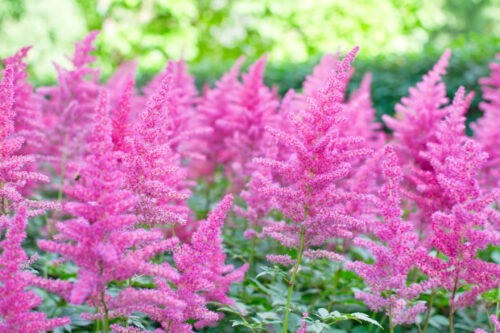
These beauties are a shade garden staple, bringing weeks of color with their feathery foliage and tall, plume-like flowers. Each flower spike is actually made up of 500 to 2,000 tiny, nectar-rich blossoms that pollinators absolutely love. Pro tip: don’t cut the spent blooms back right away! When covered in winter frost, they add a gorgeous architectural touch to your garden. These low-maintenance plants spread via runners, eventually forming lush, dense clumps.
++Coral Bells (Heuchera)
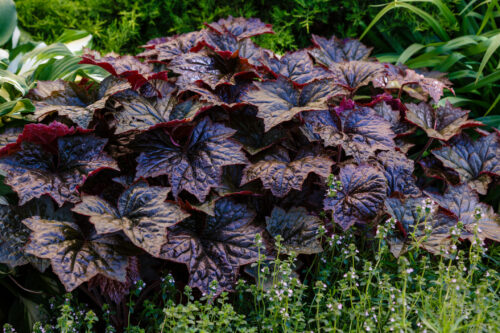
During the summer, these ultra-hardy plants produce delicate flower wands that seem to float right above the foliage. But the real stars are the heart-shaped leaves, which come in an incredible range of colors—from bright lime green and orange to deep burgundy, purple, and bronze. Many varieties have a silvery “veil” or ruffled edges that make them look like works of art.
++Ferns (Filicinophyta)
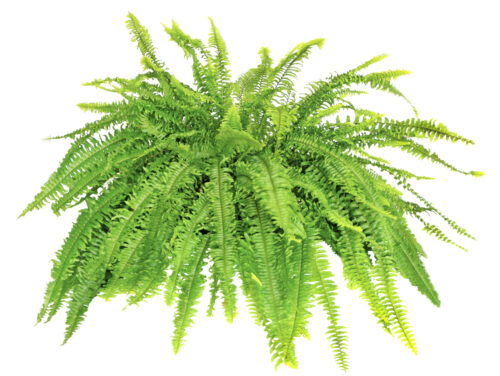
Ferns are some of the oldest plants on Earth, having thrived in shady spots for over 150 million years! Because they haven’t changed much since the time of the dinosaurs, they bring a wonderful, prehistoric feel to naturalistic gardens. Their delicate fronds start as “fiddleheads”—tightly coiled stems that look a bit like a bishop’s staff as they unfurl in the spring.
++Hostas (Plantain Lilies)
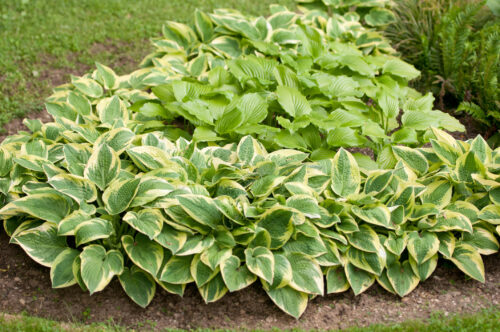
Hostas are arguably the kings of the shade garden. Their bold, textured leaves come in shades of chartreuse, deep forest green, creamy white, and even a metallic blue-gray. From July to August, they send up stalks with bell-shaped flowers in white or pale lavender. While they aren’t the fastest growers, they are incredibly long-lived and easy to care for, growing into impressive mounds that get better with age.
++Bleeding Heart (Lamprocapnos spectabilis)
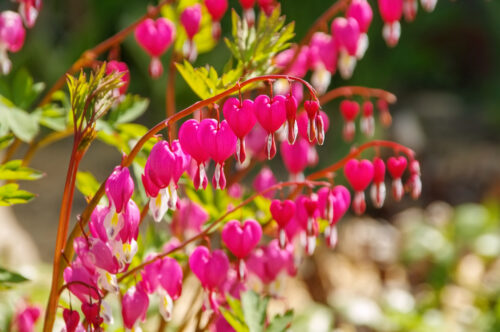
This cottage garden classic is as romantic as it gets. In early spring, it produces arched stems lined with heart-shaped flowers. The white tips at the bottom make it look like a tiny tear is falling from the heart. Just a heads-up: after blooming, this plant usually goes dormant and disappears underground for the summer, so don’t worry if it seems to vanish—it’s just resting in its roots until next year!
++English Ivy (Hedera helix)
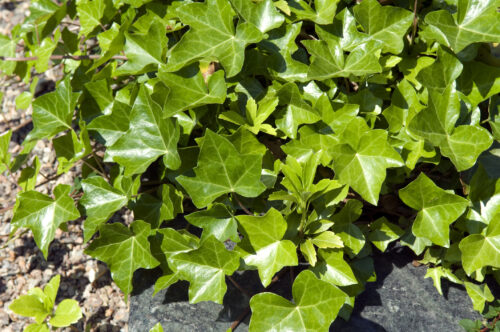
Evergreen and tough as nails, English Ivy can climb walls or trees even in deep shade. It has classic leathery, veined leaves that stay green all winter. In late summer, it produces nectar-rich yellow flowers that are a lifeline for bees, followed by dark berries that birds love to snack on during the colder months.
++Yew (Taxus)
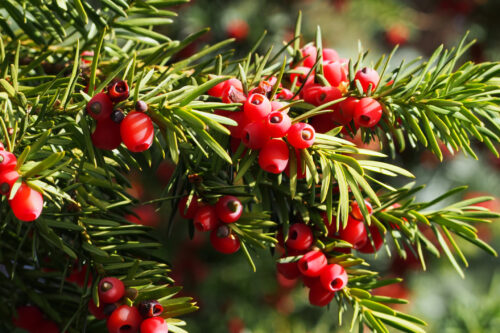
If you need a hardy evergreen shrub, the yew is a fantastic choice. It’s so efficient that it only needs about 10% of full daylight to thrive. These shrubs feature dark green needles and bright red berries that pop against the foliage. Just a quick safety note: the yew is toxic if ingested, so keep that in mind if you have curious pets or kids.
++Sweet Woodruff (Galium odoratum)
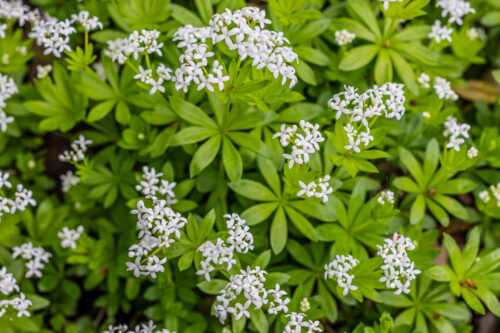
Looking for a groundcover? Sweet Woodruff is a winner. It forms a lush green carpet under trees and brightens things up with starry white flowers in April. It’s also famous for its scent—the leaves are often used to flavor drinks and desserts. Just remember to let the leaves wilt or dry out a bit first, as that’s when the signature “sweet hay” aroma really comes out.
++Wild Garlic / Ramps (Allium ursinum)
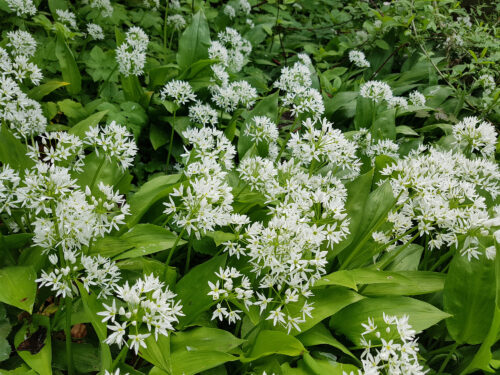
Also known as ramps or bear’s garlic, this plant is a favorite for shade-dwelling foodies. The leaves have a wonderful garlic-like aroma, and the white flower clusters are surprisingly pretty. If it likes its spot, it will naturalize and come back every spring, creating a delicious and decorative patch in your garden.
%%Lungwort (Pulmonaria)
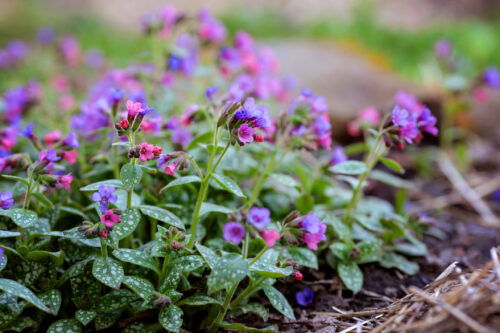
Our “secret tip” for the shade is Lungwort. Growing only about a foot tall, it’s perfect for filling in bare spots under deciduous trees. It has lovely, slightly fuzzy leaves and funnel-shaped flowers that bloom from March to May. The coolest part? The flowers often change color from pink to blue or purple as they age! Beyond its looks, it’s also a traditional medicinal herb known for its soothing properties.