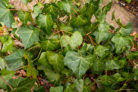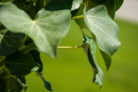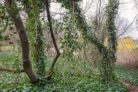
Even if you don’t have English Ivy growing in your own backyard, you’ve definitely seen it while out for a walk in the woods or peeking over a neighbor’s fence. It’s such a common sight that most of us just breeze right past it. But today, we’re taking a closer look! I’m willing to bet there are a few things about this classic climber that will surprise you.
Quick Ivy Facts
- Scientific Name: Hedera
- Plant Family: Araliaceae (Ginseng family)
- Origin: Macaronesian Islands
- Range: Now found worldwide
- Most Common Local Variety: English Ivy (Hedera helix)
- Height: As a climber, it’s (almost) limitless
- Growth Rate: Up to 3 feet per year
- Lifespan: Can live up to 500 years
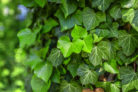
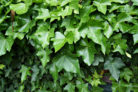
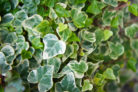
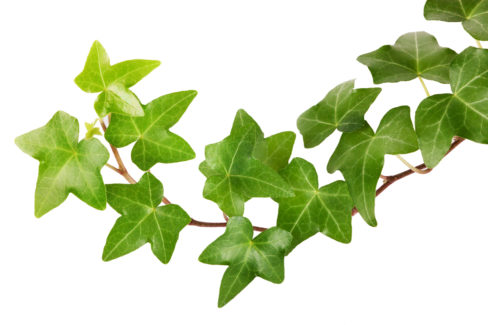
- Leaves: Mostly green, though some varieties are variegated; lobed when young, turning heart-shaped as they mature
- Flowers: Small, inconspicuous, and pale green
- Bloom Time: September to October
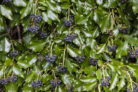
- Fruit: Small round berries, dark purple to black, ripening in the spring
- Propagation: Seeds or cuttings
- Hardiness: Fully winter-hardy
- Fun Fact: Leaves can occasionally turn red
Where Ivy Likes to Hang Out
In the wild, ivy loves the floor of shady forests. It’s not a fan of soil that’s bone-dry or soaking wet. In your garden, it usually prefers the shade at first. However, if you’re growing variegated types, they’ll need a bit of morning or evening sun to keep those colors looking vibrant. As ivy gets older, it actually gets better at handling the sun and can eventually thrive in full-sun spots.
How to Use Ivy in Your Landscape
Ivy is incredibly versatile—you can plant it in the ground or in a pot. If you want it to climb, you’ll need to give it a support like a wall or a wooden fence. It uses thousands of tiny aerial rootlets that act like little suction cups to hold on tight. This makes it a “self-clinging” climber. If you don’t give it something to climb, it works great as a dense groundcover. Plus, it makes a fantastic year-round houseplant.
Pro Tip:
If you’re looking for a better night’s sleep, try keeping ivy in your bedroom. It’s a natural air purifier that filters out toxins like formaldehyde.
The “Adult” Phase and Flowering
When ivy is young, it spends its energy sending out long, reaching vines. Once it hits about ten years old, it reaches its adult phase. At this point, the rapid climbing slows down, the plant grows bushier, and the stems become woody. This is also when you’ll see it start to bloom for the first time.
Pests and Diseases
Out in the garden, ivy can sometimes deal with fungal issues. If you’re growing it indoors, keep an eye out for pests, which tend to show up in warm rooms with dry air.
Is it Edible or Toxic?
Even though English Ivy has been used in traditional medicine, don’t go adding it to your salad! It is highly toxic if eaten, and the berries are especially dangerous. Keep it as eye candy only!
Why is My Ivy Turning Red?
While the ivy family is known for being evergreen, you might occasionally see a plant sporting red leaves. There aren’t actually any specific “red-leafed” varieties, just as there aren’t any types of ivy without aerial roots. Not every variety changes color, but some extra-hardy types turn red to protect themselves during the winter. Intense sunlight or (more rarely) a lack of nutrients can also cause those leaves to blush.