If you’re dreaming of a wall covered in gorgeous blooms, getting a handle on pruning is absolutely essential. When you prune your climbing roses the right way, you’re not just tidying up—you’re actually telling the plant to produce more flowers. Here is everything you need to know to get it right.
Climbers vs. Ramblers: Know Your Rose
Before you grab your shears, you need to know what kind of rose you’re dealing with. How a rose blooms determines how it should be cut. Roses that put on one massive show per year are usually Ramblers. On the other hand, Climbers are repeat bloomers that flower multiple times throughout the season.
There’s another big difference in how they grow. Climbers develop a sturdy, permanent framework of stiff woody canes that produce flowering side shoots. Ramblers are much more wild; they send out long, flexible shoots that grow like crazy. If you don’t keep a Rambler in check, you’ll end up with an impenetrable tangled mess in no time.
How Often Should You Prune?
The rule of thumb is simple: once-blooming roses get pruned once a year, while repeat bloomers need your attention twice. Keeping this basic rule in mind will help you make the right call for almost any variety in your garden.
Pruning Schedule for Climbers
- Prune on planting day, then again the following spring.
- Main pruning: March or April.
- Deadheading/Light pruning: Throughout the summer.
- Rejuvenation pruning: Every few years in February if the plant looks woody.
Pruning Schedule for Ramblers
- Prune on planting day, then again the following spring.
- Maintenance pruning: Start after 5 years, typically in February.
- Second pruning: Not necessary.
- Rejuvenation pruning: Only about every 7 years.
The Basic Pruning Steps
- Remove any branches growing inward or crossing over each other.
- Cut back weak, spindly stems.
- Get rid of any dead or diseased wood.
- Thin out the plant carefully to improve airflow.
Pro Tips for Pruning Success
The more vigorous the rose, the more important the haircut. If you let those fast-growing canes go wild, you’ll eventually face a “Sleeping Beauty” situation—a thorny thicket that’s impossible to manage. Don’t let your garden turn into a fairy tale forest!
How to get started:
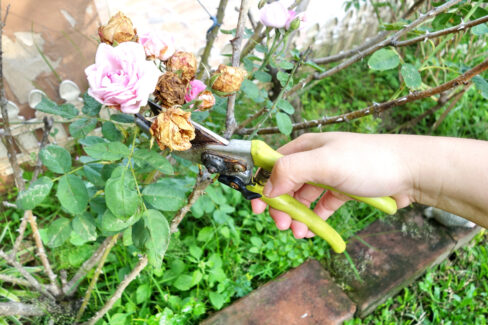
- Clean and disinfect your sharp bypass pruners.
- Put on a sturdy pair of gardening gloves.
- Start cutting!
Always wear thick gloves to protect yourself from those thorns. Make sure your shears are sharp so you get clean cuts rather than crushing the stems. Pro tip: If you chop your rose clippings into smaller pieces before tossing them in the compost bin, they’ll break down much faster into rich humus.
Spring Pruning Boosts Growth
Don’t be afraid to be a little bold with your spring pruning. A healthy climbing rose is incredibly resilient and will bounce back quickly. In fact, pruning actually triggers the plant’s natural growth hormones. Even if you make a “wrong” cut, these plants are tough and will usually sprout right back.
After you’re done pruning, give your roses a little love with some fertilizer. Using the right rose food and keeping the soil consistently moist will encourage a flush of new growth. Just make sure the soil drains well—roses hate “wet feet” (standing water), which can lead to root rot.