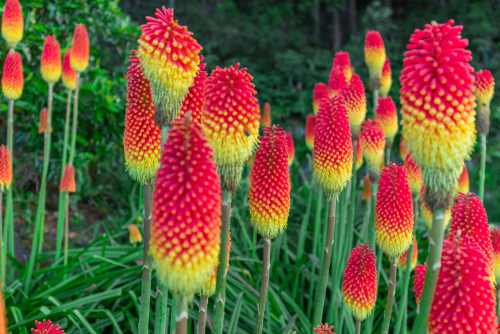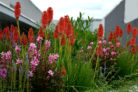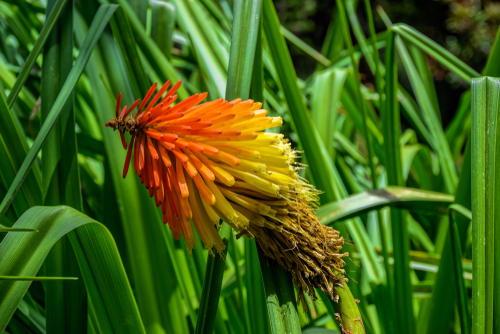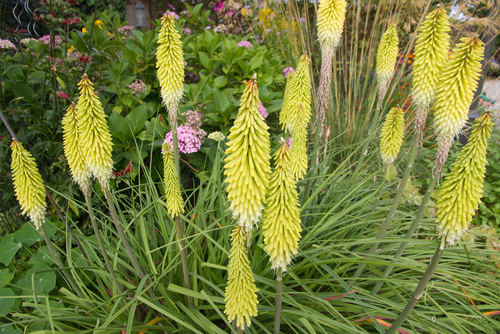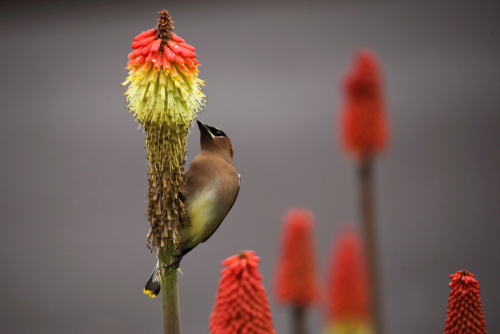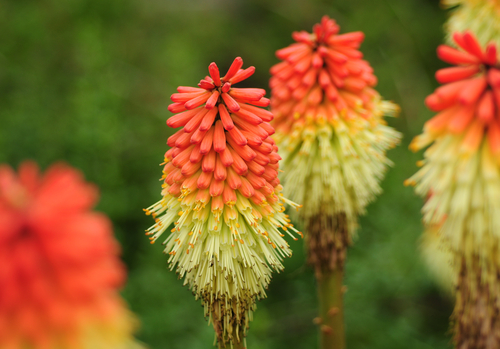
Thanks to their striking shape, Red Hot Pokers are often called Torch Lilies—and they truly live up to the name! These beauties create a literal explosion of color in your garden with vibrant shades of yellow, orange, and red. However, to keep these “rockets” firing on all cylinders, there are a few planting and care tips you’ll want to keep in mind.
A Little Piece of Africa
There are about 70 known species of Red Hot Pokers (scientifically known as *Kniphofia*). Most of them hail from the African mainland, with just a couple of species native to Madagascar and the southern Arabian Peninsula. The name *Kniphofia* actually honors Johann Hieronymus Kniphof, a 18th-century naturalist and professor. Botanically speaking, they belong to the Asphodelaceae family, making them cousins to plants like Aloe and Daylilies.
Finding the Perfect Spot
Because of their African roots, Red Hot Pokers need a location that feels a bit like home. To keep them happy, look for a spot in your yard that is:
- Sunny, warm, and sheltered from harsh winds
- Filled with well-draining soil rich in organic matter
- Ideally slightly alkaline (a little lime in the soil goes a long way!)
Planting Your Red Hot Pokers
The best time to get these in the ground is during the spring. You’ll want to plant them about three inches deep. Proper hydration is key right after planting to help them get established. Moving forward, try to keep the soil consistently moist—Red Hot Pokers are a bit like Goldilocks: they don’t like to be bone dry, but they definitely don’t want “wet feet” (standing water) either.
Pro Care Tips
Once you’ve mastered a regular watering schedule, you’ve already tackled the biggest part of caring for your Torch Lilies. One pro tip: always water at the base of the plant rather than overhead to keep the blooms dry.
I also recommend feeding them regularly. You can use a liquid fertilizer every two weeks, or go the organic route by mixing compost and horn meal into the soil a few times between May and August. Also, be sure to deadhead (remove) faded flowers quickly; this encourages the plant to keep sending up those gorgeous new flower spikes.
Pruning Your Plants
Aside from deadheading, there are a few other times you might want to trim your plants. They make incredible cut flowers! The best time to snip them for a vase is just as the buds are transitioning into open flowers—they’ll stay fresh for a surprisingly long time.
Since Red Hot Pokers are semi-evergreen, they’ll keep their foliage through the winter. Don’t cut the leaves back in the fall! Instead, wait until the following spring to trim the old foliage down near the ground. Other than that, these plants are pretty low-maintenance and don’t require heavy pruning.
Winter Protection
Since most species are native to South Africa, they are only “borderline” hardy in cooler climates. Usually, it’s not the cold that kills them, but the excess moisture of a wet winter. To help them survive the off-season, tie the leaves together into a loose “topknot” with some twine after the last flowers have faded. Then, give the base of the plant a cozy blanket of straw, leaves, or evergreen boughs to protect the crown from rot and frost.
The Big Bloom
We love Red Hot Pokers not just for their fiery colors, but for their impressive blooming season, which can last from May all the way through September. As long as you keep removing the spent stalks, the plant will keep the show going. The only reason to let the flowers dry out on the stalk is if you’re hoping to collect seeds for propagation.
Looking for some variety? Here are a few stunning cultivars to check out:
- Feuerkerze (Fire Candle): An impressive torch of orange-red.
- Ice Queen: Large, elegant creamy-white blooms.
- Luna: A soft, bright yellow.
- Alcazar: Intense, fiery red flowers.
- Royal Standard: The classic two-tone red and yellow look.