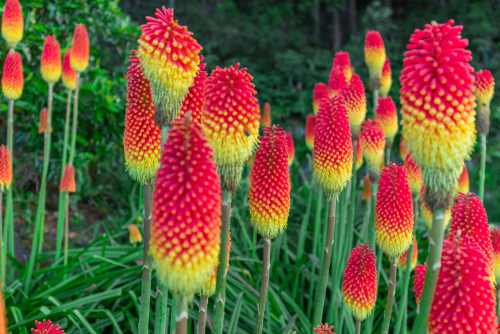
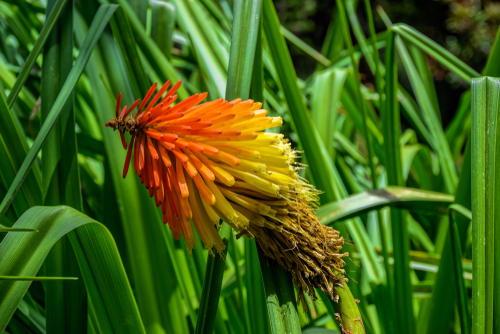
Most Red Hot Pokers (also known as Torch Lilies) hail from South Africa, which means they have a bit of a sensitive streak when it comes to freezing temperatures and soggy soil. Unless you’ve picked a variety specifically labeled as ultra-hardy, you’ll definitely want to give your plants a little extra TLC to get them through the winter.
Winter Protection for In-Ground Red Hot Pokers
Generally speaking, you can leave your Red Hot Pokers in the garden year-round. However, for those frost-sensitive varieties, you’ll want to shield them from the elements using these simple steps:
- Resist the urge to prune your Red Hot Poker’s foliage during the cold months.
- Bundle the leaves together.
- Cover the base with an insulating layer.
- Make sure they are in a sheltered spot away from harsh winds and intense winter sun.
If you want your perennials to survive in the flower bed, it is crucial that you don’t cut back that evergreen foliage in the fall. Instead, take those long, grass-like leaves and tie them together at the top. This creates a natural “tent” over the center of the plant, keeping snow and ice out of the crown. Keeping the “heart” of the plant dry is the real secret to success!
Winter Care for Potted Red Hot Pokers
If you have a variety that is only “marginally” hardy, I wouldn’t recommend planting it directly in the ground. In many climates, even a thick layer of mulch won’t be enough to save them from a deep freeze or winter rot. These sensitive beauties do much better in containers.
When the temperature drops, you can simply move the pot indoors. Find a bright, frost-free spot (like a sunroom or cool garage with a window). During this dormant period, only give them a drink of water when the soil has completely dried out.
Even Hardy Varieties Need a Little Help
Even the hardy Red Hot Poker varieties appreciate a safety blanket once the thermometer dips below freezing. For plants staying out in the garden bed, these natural materials make excellent insulation:
- Dry autumn leaves (start raking them up in the fall!)
- Evergreen boughs
- Straw
Pro tip: Always make sure the material you use for mulching is bone-dry. Using damp leaves or straw can trap moisture and lead to mold or rot, which is exactly what we’re trying to avoid!