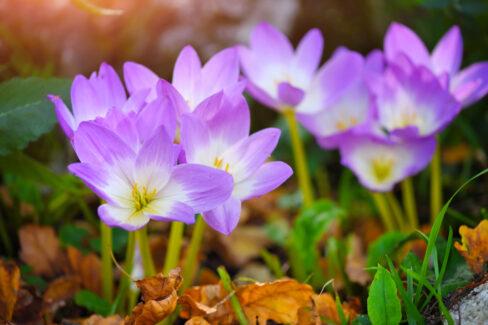
Autumn Crocus (Meadow Saffron) is a total showstopper in the fall, painting entire meadows with its gorgeous blooms. At first glance, they look just like the crocuses we know and love, but don’t let those pretty petals fool you! Despite the resemblance, the Autumn Crocus is definitely not a true crocus—and it’s actually quite dangerous.
The Most Important Difference Between Autumn Crocus and True Crocus
When you see those purple blooms popping up between August and October, it’s tempting to pick a bouquet. But hold that thought! Unlike your standard garden crocus, the Autumn Crocus is a deadly poisonous plant. Before you go reaching for what looks like a late-season crocus, you really need to know how to tell them apart.
How to Spot the Difference
- Plant Family: Autumn Crocus belongs to the Lily family (*Liliales*), while true Crocuses are part of the Iris family (*Iridaceae*).
- Stamens: This is the easiest giveaway! Autumn Crocus has six stamens, but a true Crocus only has three.
- Bulb Size: If you were to dig them up, you’d see that Autumn Crocus bulbs are about twice as large as regular crocus corms.
- Timing: Most crocuses are famous for being early spring bloomers, whereas the Autumn Crocus waits until fall to make its debut.
In some circles, people call the Autumn Crocus a “poison crocus,” but botanically speaking, they aren’t even related. The only time you might really get confused is if you’ve planted a specific variety of *true* fall-blooming crocus, like *Crocus speciosus*. Otherwise, if you see a “crocus” in the fall, treat it with caution.
Handle with Care: The Autumn Crocus is Extremely Toxic
I can’t stress this enough: never touch an Autumn Crocus with your bare hands. Every single part of this plant contains a highly toxic alkaloid called colchicine. Even a tiny amount can cause severe poisoning symptoms and can even be fatal. If you have these in your yard, make sure to keep a very close eye on your pets and kiddos!