You’ve been babying your azalea with the best compost and keeping that watering can ready at all times. So why, in the middle of summer, are the leaves turning yellow like it’s suddenly autumn? It’s because your plant is missing something essential! This is one of those situations that won’t fix itself, so it’s time to jump into action.
Why is my azalea turning yellow?
Most of the time, yellow leaves on an azalea are a cry for help due to an iron deficiency. If your soil pH is too high or you’re using hard tap water, the plant literally can’t “eat” the iron in the soil. Switch to rainwater or filtered water immediately. You’ll also want to use Epsom salts to bring that soil pH down to at least 5.5.
What are the main causes of yellow leaves?
When an azalea starts yellowing, iron deficiency (iron chlorosis) is almost always the culprit. Usually, there’s actually plenty of iron in the dirt or fertilizer, but an alkaline environment—either in your garden bed or potting mix—locks it up so the roots can’t absorb it. If you’re watering with “hard” lime-heavy tap water, you’re making the problem worse. Less common causes include a lack of nitrogen or general chlorosis from environmental stress.
How can I tell if it’s definitely an iron deficiency?
Iron deficiency has a very specific “look” as it progresses:
- First, the tips of the new shoots start to look pale.
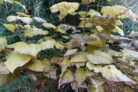
- The leaves gradually turn a bright lemon yellow.
- Crucially, the leaf veins stay dark green (this is the classic giveaway!).
- Eventually, the leaves dry out from the edges toward the center.
If you want to be 100% sure, grab a soil test kit. If the pH is higher than 5.5, you’ve found your smoking gun.
How do I fix an iron deficiency?
The good news is that once you give your azalea the iron it needs, it bounces back quickly. For a quick “first aid” fix, use Epsom salts to rapidly lower the pH into the ideal range of 4.5 to 5.5. You can work it into the soil or dissolve it in water. If you have a potted azalea, your best bet is to repot it using a specialized acidic soil mix (like one for rhododendrons). To keep the pH from creeping back up, always water with lime-free water—collected rainwater is perfect for this.
How do I spot and fix a nitrogen deficiency?
If your plant is lacking nitrogen over a long period, the yellowing looks a bit different:
- The leaves turn pale uniformly (no green veins).
- Later, they turn a deep, solid yellow.
- Even the brand-new leaves coming in look yellowish.
- The plant might eventually drop all its foliage.
To fix this, you need to fertilize your azalea to boost its nitrogen levels. Organic options like compost or horn meal work great, as does a balanced all-purpose fertilizer.
What about chlorosis and how do I treat it?
In azaleas, chlorosis often pops up when the plant is too dry, especially if it’s sitting in a very sunny spot. It can look a lot like a nutrient deficiency, but the fix is environmental:
- Loosen the soil gently.
- Give it a good soak.
- Move potted azaleas to a shadier spot.
- Consider transplanting garden azaleas if they are getting scorched.
Once the “drought” stress is gone, the chlorosis usually clears up. Just a heads-up: don’t overcompensate with too much water! Azaleas hate “wet feet” (standing water) just as much as they hate being bone-dry.
Pro Tip: Use pine mulch and coffee grounds to lower pH naturally
To keep your soil acidic the natural way, mulch around the base of your garden azaleas with pine bark or needles—ideally right after planting. As they break down, they naturally lower the soil’s pH. Used coffee grounds are also a fantastic “acidic” fertilizer for azaleas and their cousins, the rhododendrons.