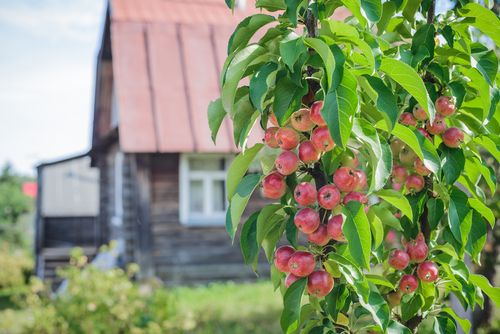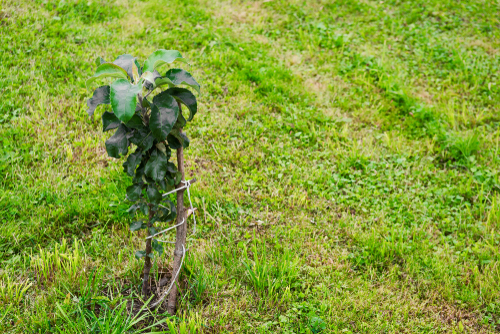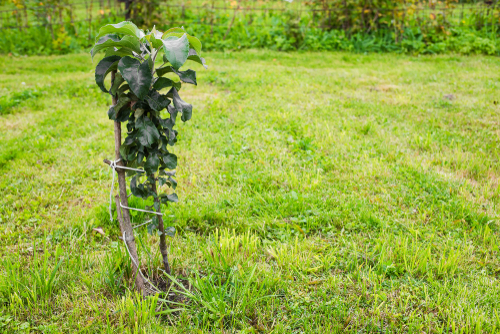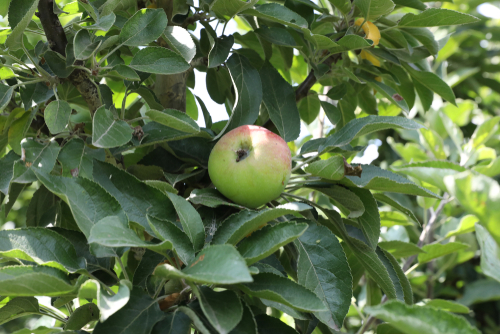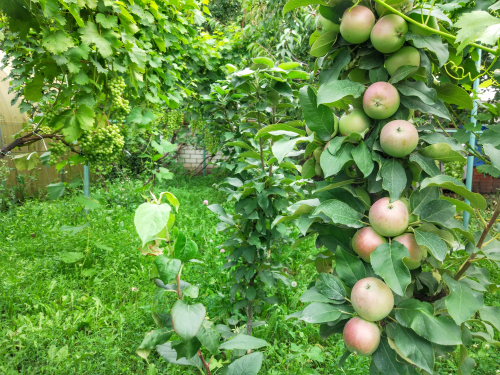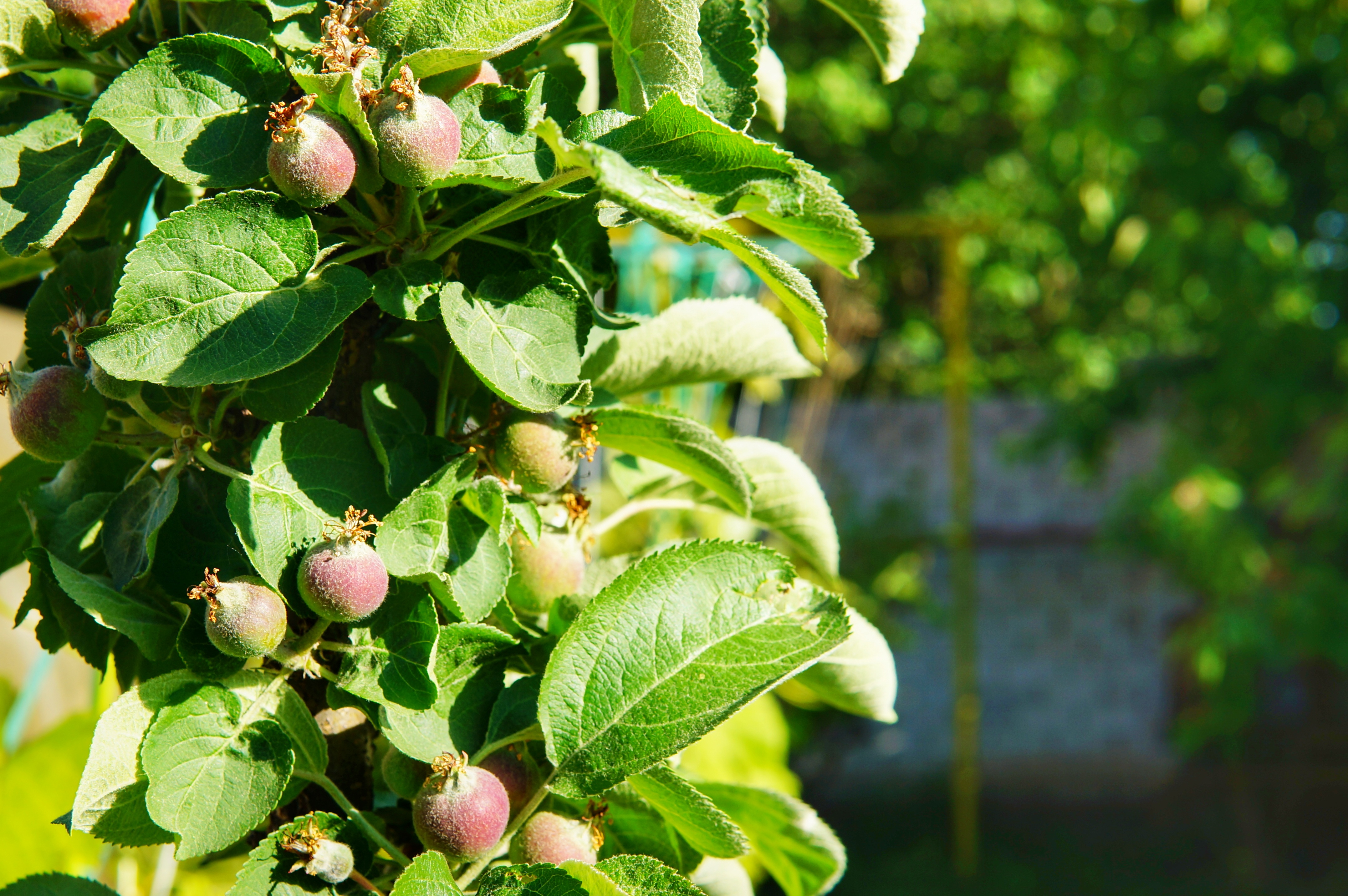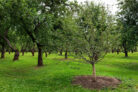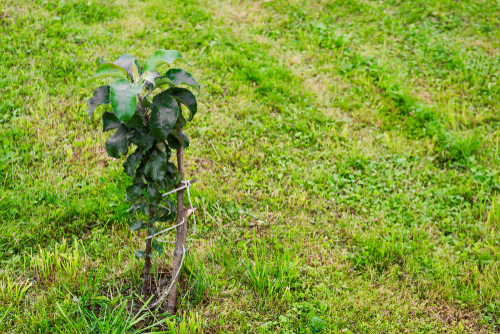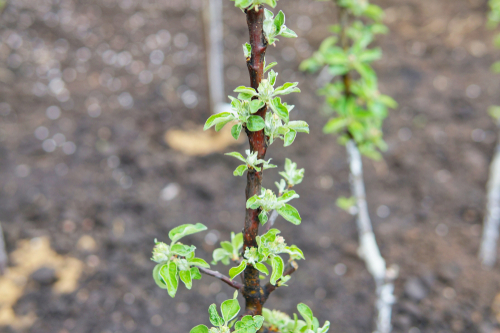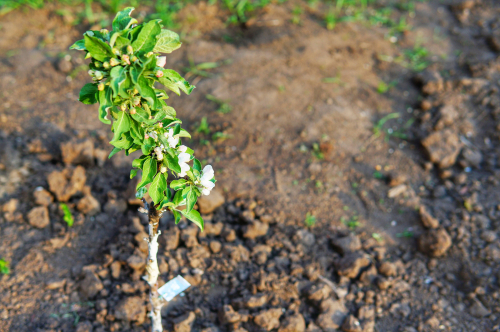
For the most part, column apple trees are pretty low-maintenance and easygoing. In fact, they usually need way less attention than your standard, full-sized apple varieties. But, if you’re looking to harvest a basket full of high-quality fruit, you can’t just “set it and forget it.” A little TLC goes a long way!
Watering and Fertilizing Your Column Apples
Right after you get your tree in the ground, and again when it’s busy developing blossoms and fruit, your little apple tree is going to be extra thirsty. Outside of those times, moderate watering is usually plenty. Just be careful not to overdo it all at once—these trees absolutely hate “wet feet” (standing water). If you’re growing your column apple in a pot, good drainage is a must. If those sensitive roots sit in water for too long, you’re looking at a nasty case of root rot. Pro tip: your tree will also appreciate a light misting with water every now and then!
When it comes to feeding, you should mix a healthy dose of compost and some horn meal into the soil right at planting. This applies to potted trees, too. Once your tree is established, aim to fertilize about two or three times a year by working some compost and horn meal into the soil around the base. The best times to do this are spring, early summer, and fall. If you’re growing in containers, your trees will need a bit more frequent feeding—try a liquid fertilizer every two to three weeks from March through September.
How to Prune Column Apples the Right Way
The best part about column apples? Unlike traditional apple trees, you generally don’t *have* to prune them. They naturally grow fruiting wood on their own. However, there are a few exceptions where you might want to grab the shears:
- The tree is getting too tall for your liking.
- The side branches are getting a bit too long.
- It’s starting to lose its signature slim, columnar shape.
- You notice diseased, dead, or overly tangled branches.
You only really need to head back the main center leader if the tree is shooting up too high. Otherwise, just trimming the side shoots back to about 6 inches (15 cm) every now and then is plenty. One more tip: if your tree is absolutely loaded with fruit, it’s actually a good idea to thin some out. If the tree puts all its energy into a massive crop one year, it might skip fruiting entirely the next year because it’s just too exhausted!