
Evergreens are the backbone of a great garden, offering lush green foliage year-round and, in many cases, acting as the perfect natural privacy screen. If you’re looking to add some structure to your yard, here are some of the most popular conifers and why they deserve a spot in your landscape.
[[plants]]
++Mugo Pine (Pinus mugo)
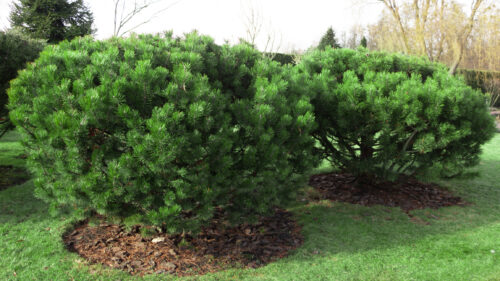
Pines are easily some of the most beloved and widespread evergreens out there. However, not everyone has room for a massive timber tree. That’s where the Mugo Pine comes in—it’s a fantastic variety that stays much lower to the ground. These hardy plants are used to poor, rocky soils, so they’ll thrive even in tough spots. And if you’re looking for something truly miniature, you can even grow a Mugo Pine as a bonsai!
++Norway Spruce (Picea abies)
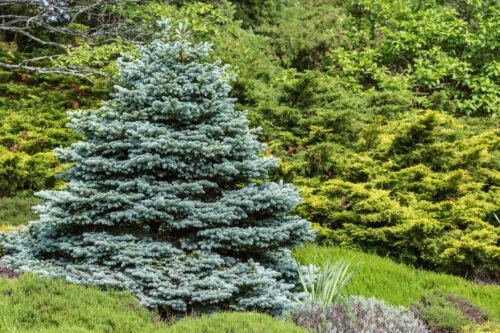
You’ve likely seen countless spruces while hiking, and the Norway Spruce is one of the most iconic. This beautiful tree is incredibly hardy and works great when planted along the perimeter of a property. It’s an evergreen powerhouse that can eventually reach heights of up to 130 feet. Depending on its age, the bark ranges from gray to reddish-brown, and it produces those classic, decorative cones we all love.
++False Cypress (Chamaecyparis)
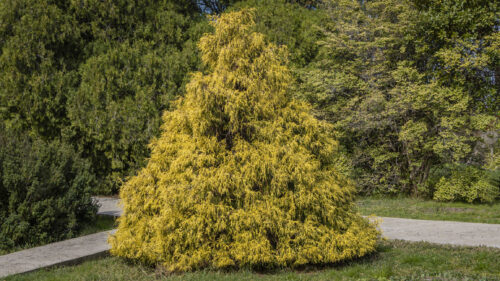
If you want that elegant Mediterranean vibe but live somewhere with chilly winters, the False Cypress is your best friend. It mimics the classic look of a traditional Cypress but is much more cold-tolerant. These trees offer a unique look and are very versatile—you can let them grow tall, keep them compact, or even prune them into specific shapes.
++Noble Fir (Abies procera)
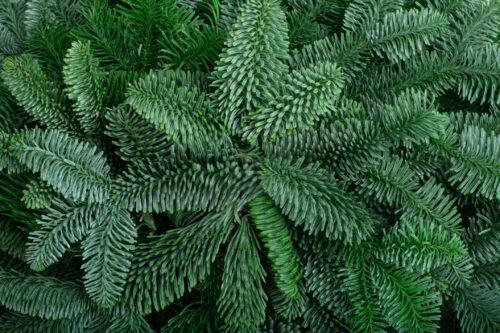
Native to the Pacific Northwest, the Noble Fir is a true standout. If you’re looking for a tree that brings a refreshing, forest-fresh scent to your yard, this is the one. It has a stronger fragrance than almost any other conifer. There’s nothing quite like taking a stroll through the garden after a rainstorm and catching that incredible piney aroma in the air.
++English Yew (Taxus baccata)
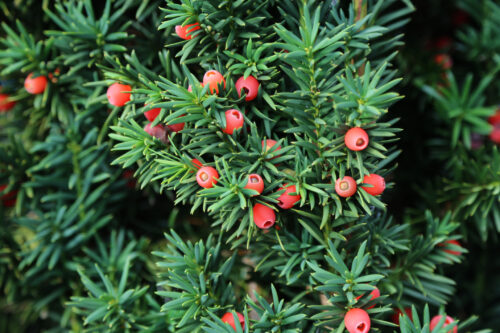
When density is the goal, the Yew is a top-tier choice. Its needles grow very closely together, creating a thick, evergreen wall that’s perfect for privacy. Because it handles pruning so well, it’s a favorite for formal hedges and topiary. Just a quick heads-up for parents and pet owners: the Yew is toxic, and almost every part of the plant contains poisonous compounds, so keep that in mind when choosing its location.
++Arborvitae (Thuja)
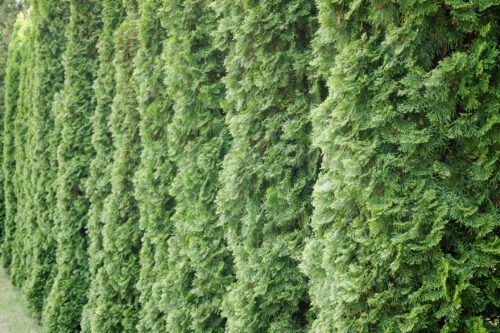
The “Tree of Life” (Arborvitae) is another fantastic option for a dense, evergreen screen. Whether you plant them as standalone specimens or in a long row for a hedge, they look great and are very easy to maintain. They are a staple in public parks and home gardens alike because they take to trimming so well. While they don’t support as much wildlife as some other species, their clean look and reliability make them a go-to for many homeowners.
++Nordmann Fir (Abies nordmanniana)
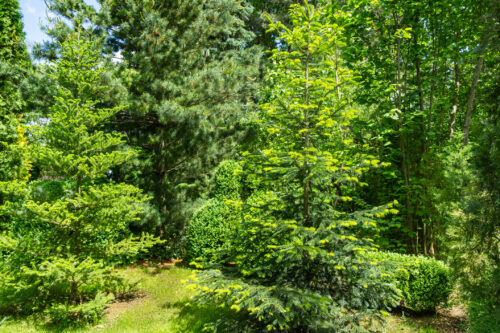
The Nordmann Fir is famous for being one of the most popular Christmas tree varieties, and for good reason! It has a beautiful, symmetrical shape and strong, soft needles. It naturally grows in a perfect pyramid from base to tip. But don’t just save it for the holidays—this is a stunning tree that provides year-round beauty and structure to any landscape.
++Weeping Blue Atlas Cedar (Cedrus atlantica Glauca Pendula)
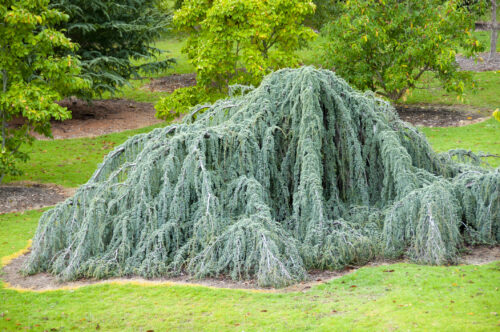
Looking for a real conversation starter? The Weeping Blue Atlas Cedar is a showstopper with branches that cascade toward the ground, much like a Weeping Willow. As a true cedar, it also has a wonderful, spicy scent. It typically reaches about 20 feet in height, making it a manageable size for most medium-to-large backyards that need a unique focal point.