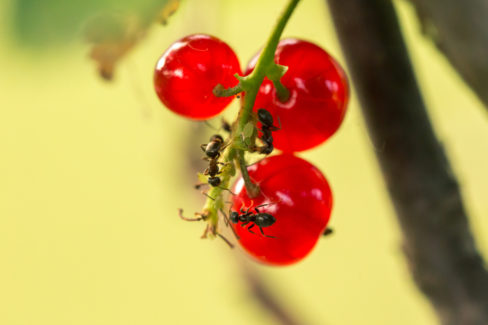
Ants and aphids have a pretty clever “you scratch my back, I’ll scratch yours” relationship. Aphids provide ants with sweet honeydew, and in return, the ants act like tiny bodyguards, grooming the aphids and defending them from predators. But for your currant bushes, this partnership is bad news. An ant-protected aphid colony can stunt your plant’s growth and seriously tank your harvest.
Aphid Species
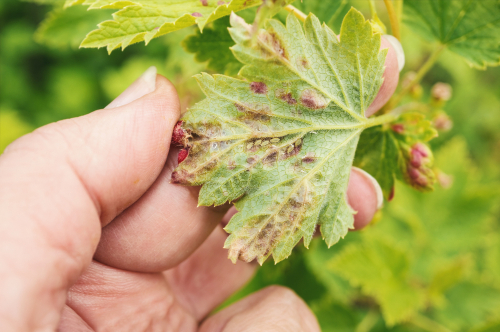
There are thousands of aphid species worldwide, and many are picky eaters that stick to specific plants. When it comes to currants, you’re usually dealing with two main culprits:
Common currant aphids:
- Redcurrant blister aphid (Cryptomyzus ribis)
- Currant-sowthistle aphid (Hyperomyzus lactucae)
There are various subspecies out there too, but for us gardeners, the exact name doesn’t matter as much as the treatment. Just know that these guys are a bit tougher than your average garden aphid. They also wake up early—usually hatching right as the first leaves bud—to start feasting on that fresh plant sap.
The Ant-Aphid Connection
Since aphids are pests that ants actively farm for honeydew, you’ll almost always find an ant nest nearby. To get rid of the aphids, your first move should actually be dealing with the ants. Ants are generally “good guys” in the garden, but when they’re protecting a pest infestation, they’ve got to go.
If you can find the ant nest, try the “flowerpot trick.” Invert a pot over the nest; over the course of a few days, the ants will move their colony up into the pot. This makes it easy to scoop up the whole nest—hopefully including the queen—and relocate them to a far corner of the yard (or the woods).
If you can’t find the nest, try disrupting their scent trails. Ants rely on smell, so strong-scented household items can really throw them off. Sprinkling dried herbs or pouring a “tea” made from these plants around your currants will confuse them.
Try these natural deterrents:
- Garlic
- Lavender
- Cinnamon
- Lemon
Getting Rid of Aphids
Most aphids crawl onto your plants (only a few are winged), so the same scents that annoy ants often work on aphids too—especially lavender and garlic. You can make a simple spray by steeping these in water and applying it directly to the infested leaves.
Aphids pierce the plant to suck out the sap, which weakens the bush and creates open wounds. These entry points make your currants vulnerable to diseases.
While a sharp blast of water from the hose can knock them off temporarily, the best long-term strategy is to invite the “natural police” into your garden. Encourage beneficial insects like ladybugs and lacewings, or hang a bird feeder nearby to attract feathered friends who love an aphid snack.