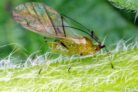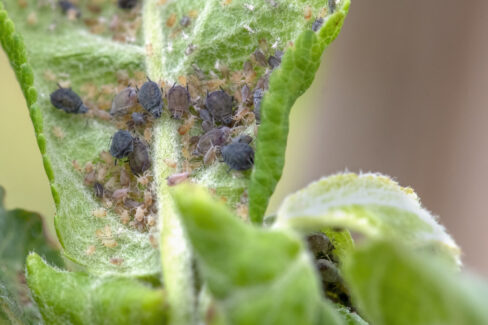
Aphids fall into the category of plant lice and, along with slugs, are easily the most common pests you’ll run into in your vegetable garden. You really have to squint to see a single aphid, though, since they’re usually only a few millimeters long.
How to Spot Aphids
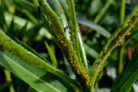
Even though they’re tiny, they usually hang out in large colonies or small clusters, making them pretty easy to spot with the naked eye. Depending on the species, aphids come in a variety of colors—you might see them in green, reddish-brown, or even black. Some of them even have wings!
That Sticky Coating on New Growth
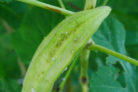
Aphids have a real sweet tooth for tender young leaves and soft new shoots. Using their needle-like mouthparts, they pierce the juicy leaves and suck out the sugary plant sap. However, they actually excrete most of that sap back out, leaving behind a sticky residue known as “honeydew” all over the host plant. This sticky mess is basically an open invitation for sooty mold, a fungus that looks like a layer of black soot growing on the leaves.
Aphids Are a Magnet for Ants
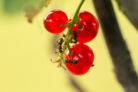
The sweet honeydew produced by aphids attracts plenty of ants. But don’t get your hopes up—the ants aren’t there to eat the aphids. Instead, they “milk” the aphids for that sugary juice. Ants actually act like a personal security detail for the aphids, protecting them from natural predators like ladybugs.
Aphids Can Spread Diseases
Because some aphids can fly, they can spread rapidly from one fruit tree to another. Dry, warm early summer weather provides the perfect conditions for an aphid population explosion. During these outbreaks, diseases, such as various plant viruses, can easily hitch a ride and spread throughout your entire garden.
Sticky Bands: A Simple Shield
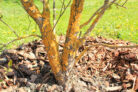
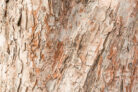
You can find sticky bands (often called grease bands) at just about any garden center or hardware store. These bands protect your trees from harmful insects like ermine moths, ants, aphids, and winter moth caterpillars. By wrapping a band around the trunk, you stop these pests from climbing up to lay eggs or munch on the foliage—they simply get stuck. One downside is that beneficial insects can occasionally get caught too, but compared to chemical pesticides, sticky bands are a much more eco-friendly choice.
Did You Know?
If you’re dealing with a major infestation, you can actually buy beneficial insects like earwigs and release them directly onto your plants. Of course, you can also encourage these “good bugs” to make themselves at home in your garden so they can take care of the pests for you. Try hanging an “earwig hotel” in your tree! Just take a clay flower pot, fill it with wood wool (excelsior), and hang it upside down in the branches. Secure the bottom with some mesh or wire so the filling doesn’t fall out, and the earwigs will move right in.