
A planted natural stone wall is a total game-changer for any backyard. Not only does it look stunning, but it also creates a bustling “wildlife hotel” for beneficial insects and small critters. If you’re looking to turn those rocky crevices into a vertical garden, here are the seven best plants for dry stone walls, plus my personal pro-tip!
[[pflanzen]]
++Yellow Corydalis (Corydalis lutea)
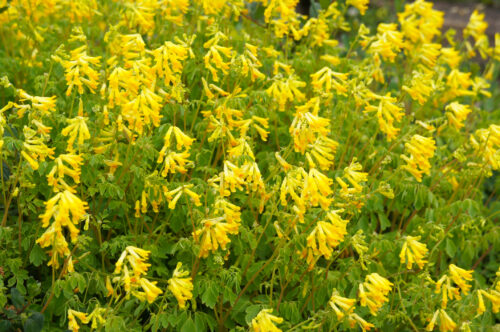
Yellow Corydalis is a real tough cookie. It thrives in the most inhospitable spots without any extra fuss, making it a superstar for stone walls. Depending on where it’s planted, it grows between 6 to 14 inches tall, forming dense, bushy mounds. From May all the way through September, it shows off bright yellow spurred flowers that look like tiny clusters of grapes. Because they’re packed with nectar, you’ll see bees and butterflies hovering around them almost non-stop.
++Snow-in-Summer (Cerastium tomentosum)
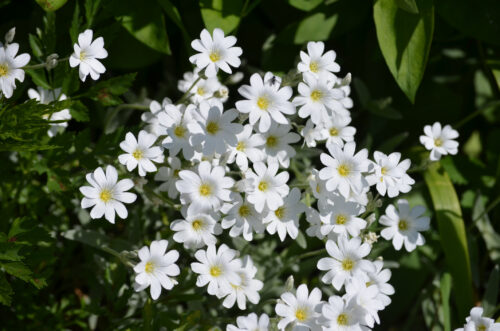
With its narrow, silvery-felted leaves, Snow-in-Summer creates shimmering mats about 4 to 8 inches high. Since the foliage stays on the plant through the winter, it keeps your wall looking great year-round. Starting in May, it explodes into a sea of white blossoms that look like fluffy clouds draped over the stones. It’s a fantastic “pollinator pantry” for bees. This plant is incredibly low-maintenance and loves poor, sandy soil or tight wall cracks.
++Candytuft (Iberis sempervirens)
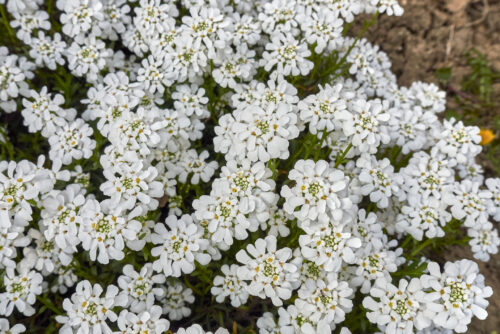
The flowers on this beautiful evergreen perennial look like countless tiny bows. They bloom from April to May, and their brilliant white color really makes a stone wall pop. You can also find varieties in soft pink or vibrant red. Since Candytuft keeps its dark green leaves during the cold months, it adds much-needed structure to a winter garden. It’s also super hardy against urban pollution, so it does great in city gardens too!
++Hens and Chicks (Sempervivum)
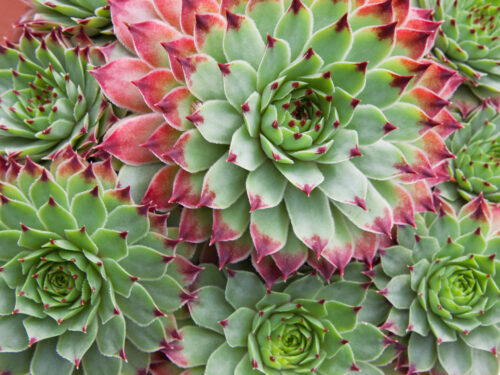
Hens and Chicks are the ultimate “set it and forget it” plants—they’ll grow in spots where even weeds struggle to survive. This diverse plant family comes in all sorts of sizes and colors. The one thing they all have in common? They love poor soil and absolutely hate “wet feet” (standing water). They form gorgeous leaf rosettes and bloom between May and August. Once a rosette flowers, it dies off, but don’t worry—it’s immediately replaced by new “chicks.”
++Rock Cress (Aubrieta)
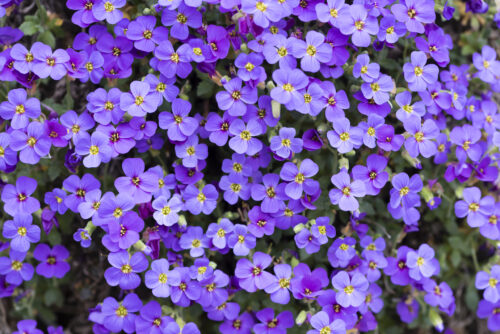
When Rock Cress spills over the top of a sunny stone wall, it creates a breathtaking waterfall of color. While the classic violet-blue is a favorite, you can now find them in white, pink, or red. The silvery-green, fuzzy foliage is winter-hardy, and because it grows so densely, it’s actually great at smothering any weeds that try to pop up in the crevices.
++Bellflower (Campanula)
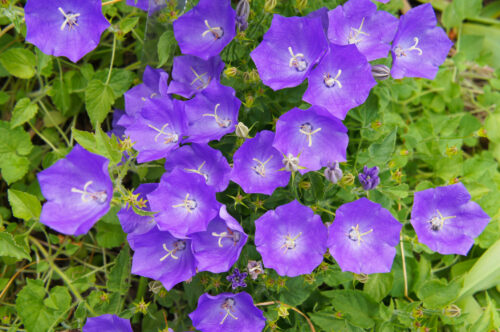
Bellflowers look particularly charming when they’re allowed to cascade down from a high spot on the wall. The low-growing varieties only reach about 4 inches in height but form long-lasting mats. The star-shaped flowers come in intense violet, white, or pink and bloom from June clear into October. Even the rounded, scalloped leaves—which usually stay green all year—add a lot of decorative flair to your garden.
++Creeping Thyme (Thymus praecox)
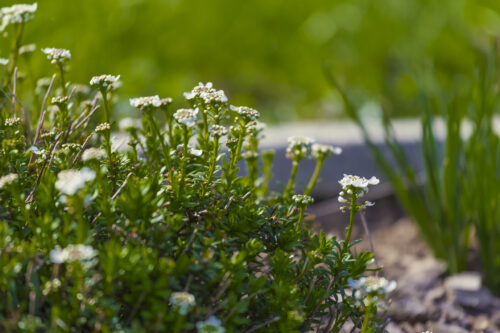
Hardly any other plant covers a wall as beautifully as Creeping Thyme. Its woody stems can find a foothold in the tiniest cracks, growing only about 2 inches high. This aromatic herb often covers itself in white, pink, or red flowers starting in May. The scent is incredible and acts like a magnet for bees and butterflies. It’s very self-sufficient and requires almost zero effort on your part.
%%Saxifrage (Saxifraga)
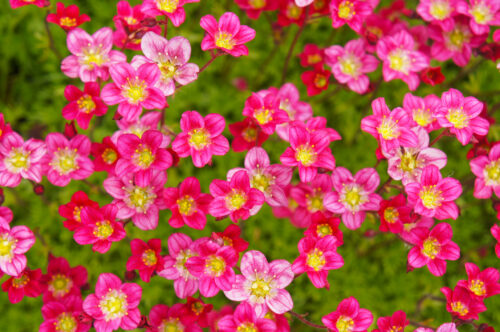
The name “Saxifrage” literally means “stone-breaker,” so you know these guys are perfect for stone walls! They form low, evergreen carpets or tidy rosettes. Most species bloom beautifully in the spring in shades of white, yellow, orange, pink, or purple. They usually grow between 2 to 8 inches tall, with flower stalks that often hover high above the foliage. They’re very low-maintenance—just give them a quick “deadheading” or cleanup in the fall, and they’re good to go.