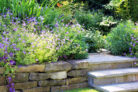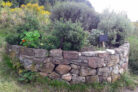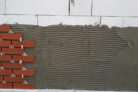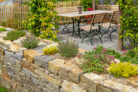
Garden walls are a staple in so many backyards, and for good reason! They aren’t just functional; they’re one of the best tools you have for shaping your outdoor space and adding some serious curb appeal. Whether you’re looking for a rustic look or something modern, the stones you choose make a huge impact. But before you start stacking, we need to talk about the “groundwork”—literally. The type of wall you want determines exactly what kind of foundation you’ll need to build.
Let’s dive into everything you need to know about garden walls and getting that foundation just right.
Different Foundation Options for Your Garden Wall
Before you start calculating your foundation needs, you’ve got to decide on the vibe of your wall. There are so many cool stone options out there—slate, basalt, and granite are personal favorites for a natural stone look. Generally speaking, your project will fall into one of two categories:
- Foundations for dry stone walls
- Foundations for mortared (wet) walls
Foundations for Dry Stone Walls
If you’re going for a dry stone wall, I have some good news: you can usually skip the heavy concrete! Since these walls are held together by gravity and clever stacking rather than mortar, you don’t have to dig quite as deep. Usually, a trench about 20 inches (half a meter) deep will do the trick.
The Materials
To keep moisture from wicking up into your stones (breaking those capillaries!), you’ll want a solid base of gravel and crushed stone. I also recommend topping that with a layer of builder’s sand. This setup prevents the wall from shifting or sinking over time, keeping everything stable for the long haul. If your yard tends to get soggy, you might even want to lay down a drainage pipe to channel water away.
DIYing the Foundation
You can totally tackle this yourself! The big secret to success here is compaction. You’ll want to use a plate compactor (you can usually rent these) to pack down those layers of gravel and stone. The more time you spend compacting, the more stable your wall will be years down the road.
Foundations for Mortared Walls
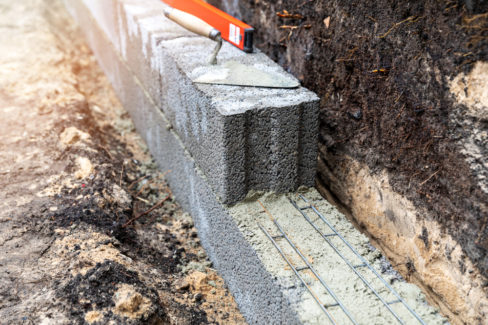
Now, if you’re planning a “wet” wall—meaning you’re using mortar or cement to bond the stones—you’re going to need a proper concrete footing, also known as a strip foundation. This needs to sit below the frost line to prevent cracking when the ground freezes and thaws. Depending on where you live, that usually means digging down about three feet (one meter).
Concrete Basics
Stability is the name of the game here, so don’t skimp on the materials. You’ll want a concrete strength of at least B15. You can mix this yourself if you’re feeling ambitious, or just have ready-mix concrete delivered if you want to save your back!
The Strip Foundation
A strip foundation is the perfect “footprint” for a wall because it follows the exact line of your structure. The key is to set up your foundation forms with plenty of precision. Once the concrete is set, I highly recommend laying down a bitumen membrane (a waterproof barrier) before you start masonry work to keep ground moisture from seeping up into your beautiful new wall.