Evergreens are the secret weapon of a well-designed yard. They provide structure all year long and offer that much-needed privacy, even when the rest of the garden is dormant. If you’re working with a smaller lot, you might think your options are limited, but there are plenty of stunning varieties that won’t take over your space. Here are seven of the most popular evergreen trees for small gardens, plus a little “insider tip” at the end!
[[pflanzen]]
++Japanese Yew (Taxus cuspidata)
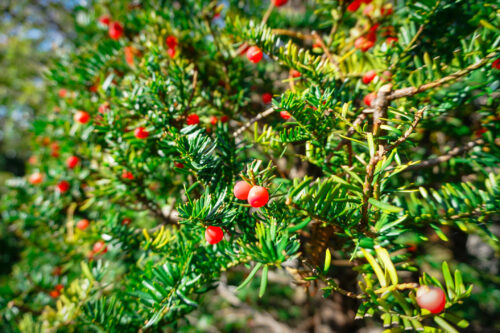
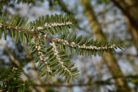
Even if you don’t reach for the shears, the Japanese Yew naturally grows into a lush, bushy shape. It’s incredibly dense with tons of short shoots and needles that are a bit lighter and more yellowish at the stem than the European variety. It’s a fantastic, eco-friendly alternative to Boxwood. If you’re feeling creative, this yew is perfect for “cloud pruning”—that cool Japanese aesthetic where branches are shaped into floating green clouds.
++Dwarf Balsam Fir (Abies balsamea ‘Piccolo’ or ‘Nana’)
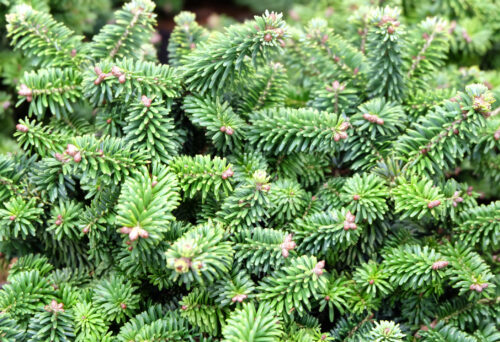
If you’re looking for something slow-growing and compact, this is your tree. The Dwarf Balsam Fir stays small (usually around three feet tall) and grows in a neat, rounded shape. The needles are a beautiful deep green, and the cones are a real highlight—starting out blue-violet before turning a soft grayish-brown. It’s a perfect choice for front yards or adding texture to tight garden corners.
++Korean Fir (Abies koreana)
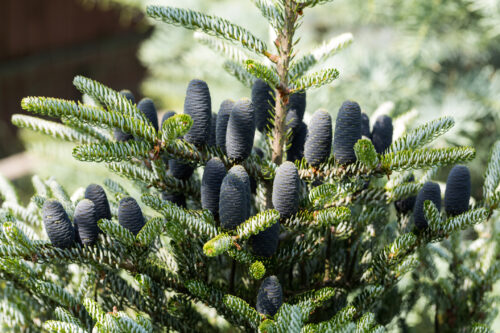
The Korean Fir is a real showstopper thanks to its elegant shape. Its shiny, dark green needles grow all the way around the branches, giving it a full look. But the real “wow” factor? The upright, violet-blue cones. Unlike many other firs, this one starts producing cones when it’s only about three feet tall! Since it grows so symmetrically on its own, you can pretty much leave the pruning shears in the shed.
++Dwarf Mugo Pine (Pinus mugo var. pumilio)
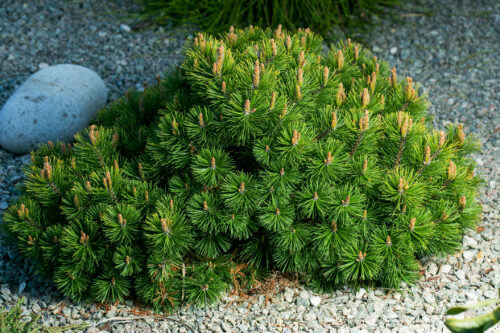
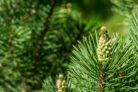
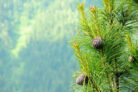
This popular little pine is a hardy variety that feels right at home in rock gardens. It features dark green needles that grow in pairs and stays quite low to the ground. Every few years, it sheds its old needles to make room for fresh growth, and you’ll see cute, round, violet-blue cones pop up. Pro tip: If you want to keep it looking extra compact and “round,” just pinch off the new “candles” (the fresh growth tips) in the spring.
++Mugo Pine / Swiss Mountain Pine (Pinus mugo)
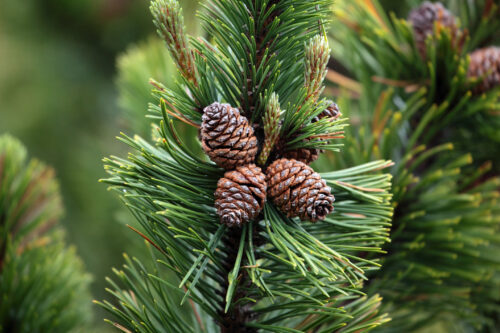
In the wild, these pines are tough enough to handle mountain ridgelines, but they’re just as happy in a backyard. They tend to grow about as wide as they are tall, creating a sturdy, branched shrub. The needles stay on the tree for up to nine years—much longer than the dwarf version—giving it a very “full” look year-round. It handles pruning like a champ, so you can easily keep it at the size that fits your garden best.
++English Holly (Ilex aquifolium)
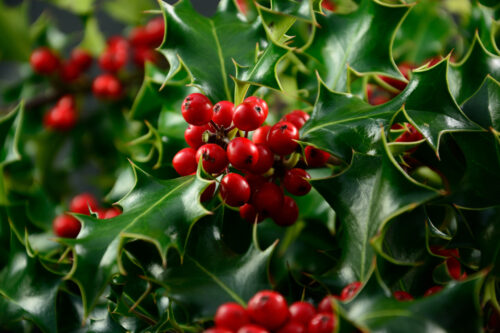
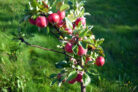
Holly isn’t just for Christmas decorations! This slow-growing evergreen can live for a very long time and adds a classic look to any garden. The glossy, spiky leaves are unmistakable. Since Ilex is dioecious (meaning there are separate male and female plants), you’ll want one of each if you want those iconic red berries. Just a heads-up: those pretty berries are toxic to humans, so keep an eye on the kiddos!
++’Atrovirens’ Privet (Ligustrum vulgare ‘Atrovirens’)
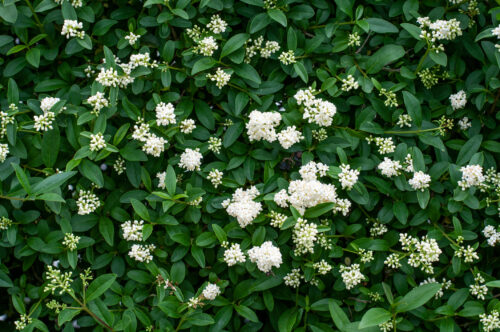
This variety of privet grows tall and narrow, making it an excellent choice for a privacy hedge in a small space. In mild winters, the leaves stay a deep green; if it gets really cold, they might turn brown, but they’ll stay on the branch until the new leaves push them off in the spring. In early summer, it produces fragrant white flowers that pollinators absolutely love.
%%Dwarf Cork Bark Fir
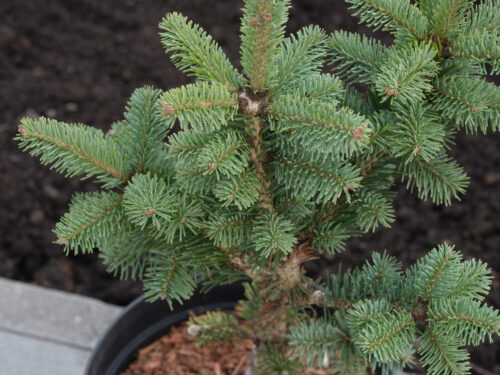
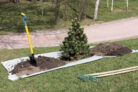
Here’s our secret favorite: The Dwarf Cork Bark Fir. It grows into a perfect, dense cone and tops out at around 10 feet, making it a great fit for smaller yards. What makes it special is the stunning silvery-blue color of the needles. It provides a beautiful contrast against the typical greens of other garden plants. Because it has such a naturally lovely shape, it works perfectly as a “specimen tree”—a focal point that stands all on its own.