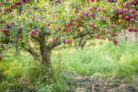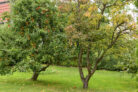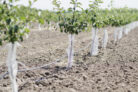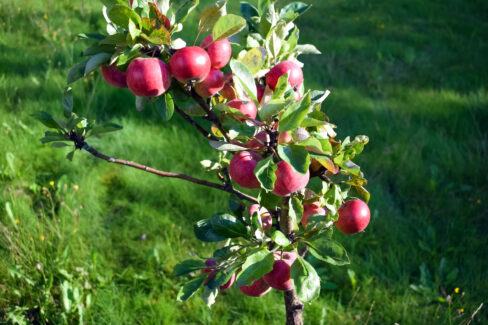
All too often, gardeners rush into buying a tree without giving it much thought. But here’s the thing: trees are picky! They have specific needs when it comes to soil and location. Before you head to the nursery, remember that a tree is a long-term investment, so it pays to do your homework and choose carefully.
It’s All About the Rootstock
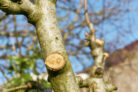
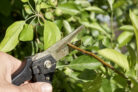
A quality apple tree is actually a “team effort” made of two parts. You have the “rootstock” (the roots and lower stem) and the “scion” (the fruiting variety grafted on top). The rootstock is what really determines how big your tree will get. If you want a tree that stays small—like a bush or spindle tree—you’ll want one grafted onto a dwarfing rootstock like M9 or M26. Of course, even with the right roots, regular pruning is key to keeping your tree compact and productive.
The Bush Apple Tree
While bush trees aren’t the absolute smallest tree form out there, they are much more manageable than standard or semi-standard trees. A bush tree usually has a trunk height of about 1.5 to 2 feet. These guys start producing fruit as early as their second year and can live for up to 30 years, reaching a maximum height of around 11 to 13 feet.
The Spindle Bush
The spindle bush (or simply “spindle”) has a trunk height similar to the bush tree but stays even more compact, topping out at 8 to 10 feet. The big perk here? Spindles often start bearing fruit in their very first year! They generally live between 15 and 25 years. Just a heads-up: spindles always need a little extra support. You’ll want to put a sturdy stake in the ground when planting that stays there for the life of the tree.
Columnar Apple Trees
If you’re tight on space, columnar trees are a total game-changer. These narrow tree forms are perfect for small backyards because they require very little planting distance between them. The best part about columnar apples compared to other fruit types is that they are “true” columns. While other fruit trees need constant pruning to keep their shape, columnar apples naturally grow upright with very little maintenance—you just snip off the occasional side shoot.
Espalier Trees for Walls and Fences
Want to turn a wall or a fence into a food source? Espalier trees are trained to grow flat, often in U-shapes or slanted patterns, and usually start producing fruit by year two. These forms can reach heights of up to 11 feet and can live anywhere from 20 to 40 years.
Growing Small Apple Trees in Pots
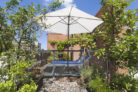
You don’t even need a yard to grow apples! A young two- or three-year-old tree grafted onto a dwarfing rootstock (like M9) will do great in a container. The key is finding the right spot: it needs to be sunny and sheltered. A cozy patio is perfect, just make sure it’s not sitting in a “frost pocket” or a wind tunnel. Choose a pot that’s at least 20 inches in diameter and stay on top of your watering!