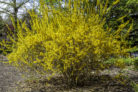
Forsythias are easily some of the most stunning early spring bloomers out there. But let’s be honest: while those golden branches are gorgeous, they don’t offer much for our pollinator friends since they don’t produce nectar. By choosing the right companion plants to grow underneath, you can make your shrub look even better while creating a much-needed buffet for bees.
What are the best plants to grow under a Forsythia?
You’ve got plenty of great options, from classic spring bulbs to hardy wild herbs. Spring favorites like crocuses, snowdrops, Siberian squill, and tulips look absolutely charming nestled at the base. If you’re looking for something a bit more “wild,” woodruff and wild garlic (ramps) also thrive in the dappled shade these bushes provide.
How do I plant under a shallow-rooted shrub without hurting it?
Forsythias are shallow-rooted plants, meaning they grow a dense mat of fine roots right near the surface. This can make life a little tough for neighboring plants! To keep everyone happy, choose hardy varieties that don’t need much root space, can handle some shade, and won’t mind the occasional dry spell when the shrub gets thirsty.
Which spring bloomers pair best with Forsythia?
If you love that “burst of sunshine” look, you can create a monochromatic yellow garden bed that really pops. For a golden theme, try mixing in:
- Lesser celandine,
- Winter aconite,
- Daffodils,
- Yellow tulips or hyacinths.
Of course, yellow plays well with almost every other color, too. If you want a vibrant, multi-colored spring display under your forsythia, consider:
- Siberian squill,
- Grape hyacinths,
- Snowdrops,
- Crocuses,
- Tulips,
- Bluebells.
The best part? Many of these bulbs will naturalize over time, spreading out to create a lush carpet of flowers year after year.
Which wild herbs and perennials harmonize with Forsythia?
For a more natural look, try wild herbs that bloom right alongside the forsythia. These choices look beautiful against the yellow bells:
- Sweet woodruff,
- Wild garlic (ramps),
- Violets,
- Primroses.
Low-maintenance Cranesbill (hardy geraniums) are another fantastic choice. They usually start opening their buds just as the forsythia flowers begin to fade. If you pick a vigorous groundcover variety, their pretty foliage will even help keep those pesky weeds at bay!
Pro Tip: Don’t forget to feed your bulbs and herbs!
Since the forsythia is a bit of a space-hog, you’ll want to make sure your underplanting isn’t fighting for nutrients. Give them a boost in the spring with an organic fertilizer like compost or horn meal. Avoid heavy nitrogen fertilizers (like fresh manure), as these can be a bit too much for easy-going bulbs and wild herbs, actually causing them to grow poorly.