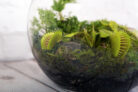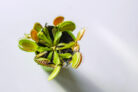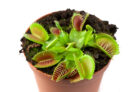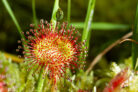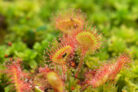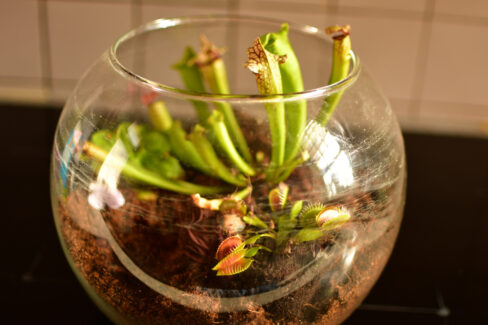
Carnivorous plants absolutely love high humidity. However, keeping that moisture level up in a heated home can be a real struggle. That’s why growing them in a glass container is such a fantastic alternative to a standard pot!
Choosing Your Glass
When picking out the perfect glassware, it doesn’t necessarily have to be sealed shut. While closed terrariums are an option, they’re a bit more high-maintenance because you have to vent them regularly to prevent mold from moving in.
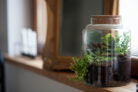
Semi-open containers or tall glass jars are usually your best bet. A lot of plant parents also love using hanging glass vases—they look amazing dangling right in a sunny window!
Drainage is a Must
Carnivorous plants need consistently moist soil, so you’ll need to water your carnivores regularly. The tricky part with glass containers is that there’s nowhere for excess water to go, which increases the risk of root rot. To fix this, you need a solid drainage layer at the bottom—aim for at least an inch or two.
Great options for your drainage layer include:
- Clay granules
- LECA (expanded clay pebbles)
- Lava rock
Try to choose a substrate that isn’t too coarse. This helps keep the soil from mixing too much with the drainage layer and prevents the roots from growing too deep into the standing water at the bottom.
Finding the Perfect Spot
Most carnivorous plants are sun-worshippers. This goes for plants you keep outside in the summer as well as those you overwinter indoors away from the frost. The catch with glass containers is that while the plants need light, the glass can act like a magnifying glass. If it gets too hot, your plants can literally cook!
Keep a close eye on them during the summer and make sure they aren’t sitting in harsh, direct midday sun. Even with high humidity, most plants won’t survive that kind of heat trap.
Also, if you just brought a new plant home, give it some time to adjust. Greenhouse-raised plants usually haven’t built up a “tan” yet and need a few days of indirect UV light to toughen up. Start them off in a bright, partially shaded spot for a few days before moving them into the full sun.
General Care
One of the coolest things about carnivores is that you never have to worry about fertilizer! Instead, just focus on keeping them hydrated every few days. Pour about an inch of water into the glass and wait for the soil to soak it all up. Give it about two days of “rest” once the standing water is gone before you refill it. And don’t forget: to keep them happy and healthy, you should repot your carnivorous plants annually.