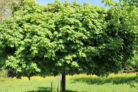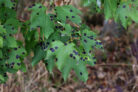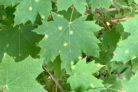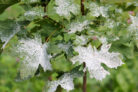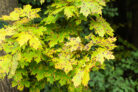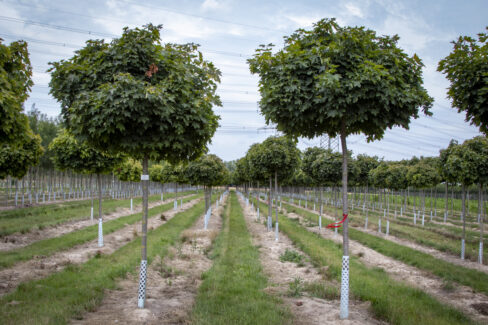
As a grafted variety of the Norway Maple, the Globe Maple (or Globosum) grows much slower than its wild cousins. It also stays a lot smaller, which makes it an absolute dream for small backyards or front-yard landscaping where space is at a premium.
How Big Does a Globe Maple Actually Get?
The height of a Globe Maple is always tied to its trunk circumference and crown width. To give you a better idea of what to expect, I’ve put together three typical growth stages:
- At a height of about 13 feet, you’re looking at a trunk circumference of roughly 8 inches and a crown width of about 4 feet.
- Once it reaches around 16 feet, the trunk usually measures about 12 inches around, with a crown diameter of roughly 8 feet.
- If your Globe Maple hits its peak at 20 feet, the trunk circumference will be about 24 inches, and the crown can spread out to a full 20 feet wide.
On average, you can expect annual growth of about 6 to 8 inches. Of course, if you’re doing a regular topiary trim, those numbers will shift since you’re cutting back the crown more aggressively. When left to its own devices (with just a little thinning), the crown starts out perfectly round in its younger years and gradually takes on a more pyramidal shape as it matures.
What’s Going On Underground?
The roots of a Globe Maple are what we call “heart-shaped” root systems. Here’s what that looks like in your garden:
- Lots of shallow, lateral roots.
- Roots often visible near the surface.
- Fewer roots directly under the main trunk.
- An overall root structure that mimics a heart shape.
Since those surface roots can sometimes be a bit of an eyesore in a perfectly manicured lawn, they can be a little tricky. My favorite fix? Simply underplant the tree with some hardy groundcovers to hide the roots and add some extra color.
How Do You Keep a Globe Maple Happy?
Beyond its compact size, gardeners love this tree because it’s so low-maintenance. For basic pruning, just clearing out the deadwood every 2 to 3 years is usually plenty. As for fertilizer, it doesn’t need much—just enough to boost its immune system against diseases and help it stay strong through the winter months.