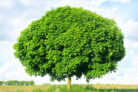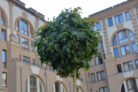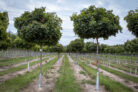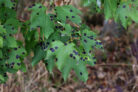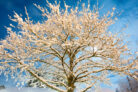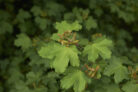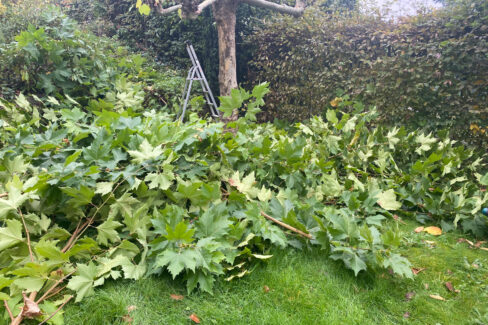
With its perfectly round canopy, the Globe Maple (Kugelahorn) definitely lives up to its name! But to keep that tidy, lollipop-like shape looking its best, you’ll need to give it a regular trim. I’m going to walk you through exactly when your tree needs a haircut and how to prune it like a pro.
When is the best time to prune a Globe Maple?
Globe Maples have a very strong sap flow during their active growing season. In early autumn, that flow slows down significantly, making it the perfect window for pruning. Light frost isn’t a problem, so don’t worry if the temperature drops a bit. However, pruning at the wrong time of year can cause the tree to “bleed” sap excessively. This weakens the tree’s immune system and makes it much more vulnerable to pests and diseases.
In many regions, local conservation laws restrict heavy pruning to the window between October and February to protect nesting birds. While light maintenance snips are sometimes allowed earlier, they aren’t really ideal for the Globe Maple.
The best way to tell if your tree is ready is to check the sap flow yourself. Make a small “test cut” on two thin twigs. If the cut bleeds heavily, wait a week and try again. If only a tiny bit of sap appears, you’re good to go! Just make sure you wrap up your pruning by January at the latest.
Why do you need to prune a Globe Maple?
There are a few main reasons why you should reach for the shears:
- Thinning out the canopy to keep the tree healthy
- Removing “wild” water sprouts
- Maintaining that signature round shape
- Rejuvenating an older or neglected tree
- Repairing damage after a storm
How to prune your Globe Maple successfully
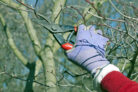
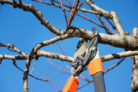
Having the right tools is half the battle. Clean, sharp cuts heal much faster. If you crush the branches with dull blades, you’re basically inviting fungus and pathogens to move in. To keep things safe, always disinfect your tools before and after use. Here’s what I recommend:
- Bypass loppers for branches up to 1.5 inches (3.5 cm)
- A folding pruning saw for anything thicker than 1.5 inches
Thinning out the canopy
How often you thin out the tree depends on the look you’re going for. When they’re young, Globe Maples grow into a round shape all on their own. As they get older, they tend to get a bit “pointy” at the top, looking more like a pyramid. This growth habit provides great shade for a patio set, but it might not be the look you want for a decorative front yard.
If you like the natural look, thin it out every two to three years. If you prefer a strictly manicured sphere, thin it out annually before you do your shaping. When cutting, make sure not to leave long “stubs.” You’ll want to remove:
- Dead or leafless branches (cut back to the branch collar)
- Branches growing inward toward the trunk
- Crossing or rubbing branches
Dealing with wild shoots
Globe Maples sometimes produce “wild” shoots (also called water sprouts) that pop out from the trunk or the base of the tree. If you leave them, they can eventually overtake the main canopy. You should remove these as soon as you see them, regardless of the season. If they’re still tiny, you can usually just snap them off by hand. If they’ve been growing for a year, you’ll need to saw them off. Pro tip: Rubbing a little charcoal ash on the cut can help the tree heal faster.
Shaping your tree
Once you’ve thinned out the middle, you can start the shaping process. Always make your cuts just above a bud or leaf node. Here’s the game plan:
- Shorten side branches that are sticking out too far by about one-third.
- If the canopy is looking a bit thin, you can also head back the main branches by a third to encourage bushier growth.
- Be careful not to nick the branch collar (the swollen area where the branch meets the trunk).
Rejuvenation pruning
Sometimes a tree needs a fresh start. This usually happens if:
- Pruning has been neglected for years
- There’s a major pest infestation
- The tree is diseased
For a rejuvenation cut, you’ll radically prune all branches back to about 4 to 6 inches (10–15 cm). Crucial: Do not cut into the “knob” at the top of the trunk where the tree was grafted! It’s easier on the tree if you do this in stages over a couple of years, though that’s not always an option if the tree is sick.
Repairing storm damage
If a storm snaps a few branches, don’t panic—you don’t usually need to cut the whole tree down. With some targeted pruning, it will bounce back:
- Trim damaged branches back into the healthy wood.
- Always cut just above a bud.
- If a branch is badly splintered, saw it off clean at the branch collar.
Safety first: If a broken branch is dangling and poses a risk to people walking by, remove it immediately, no matter what time of year it is. Just be sure to check with your local municipality if there are strict tree protection ordinances in your area!