Indoor palms are a staple in almost every living room or sunroom, and for good reason! These low-maintenance beauties are the perfect way to add a touch of tropical flair to your home. But with so many different varieties available at the garden center, it can be a little tricky to figure out exactly which type of palm you’re looking at.
The Wonderful World of Indoor Palms
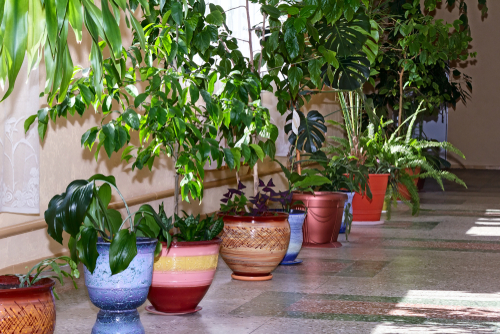
Whether it’s a massive fan palm or a delicate feathery variety, these plants are stars in bright sunrooms. You’ll also often see “palm-like” plants, such as the Yucca, being grown right alongside true palms.
Here are some of the most popular palms (and look-alikes) that home gardeners love to grow:
- Chilean Wine Palm
- Date Palm
- Parlor Palm (a classic!)
- Coconut Palm
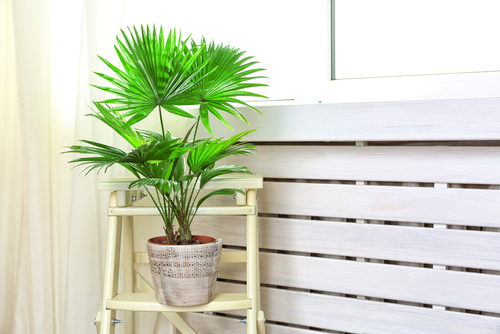
- Windmill Palm
- Yucca (actually a member of the agave family)
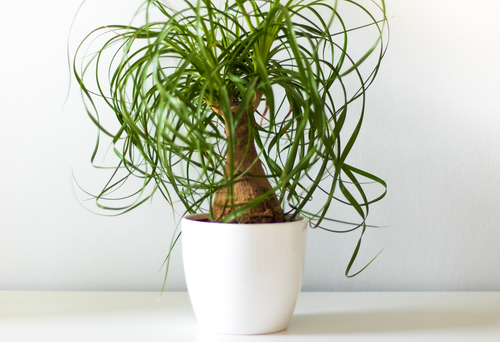
- Ponytail Palm (technically an asparagus relative)
- Cast Iron Plant (another asparagus relative—perfect for beginners because it’s practically indestructible!)
If you take a close look at the leaves when you’re shopping, you can actually tell these varieties apart pretty easily.
Fan Palms vs. Feather Palms
One of the easiest ways to identify a palm is by looking at how its leaves grow. On most indoor palms, the base of the leaf wraps around the trunk to give the frond extra support. When an old leaf dries up and falls off, it leaves behind a distinct scar on the trunk.
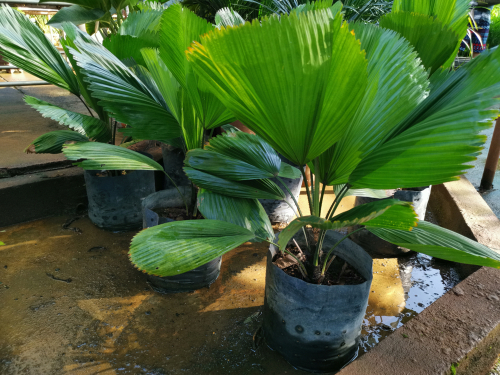
Fan palms (like Washingtonia or Livistona) have leaves that fan out from the end of the stem. These leaves are usually round and divided into segments, with ribs radiating out from the base to the edge of the leaf—just like a hand fan!
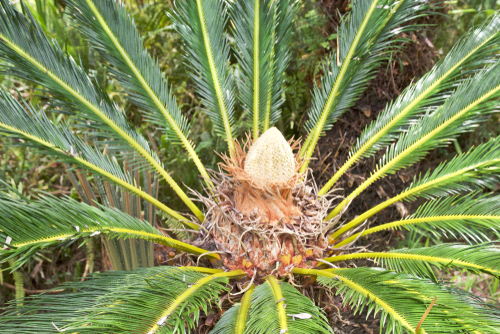
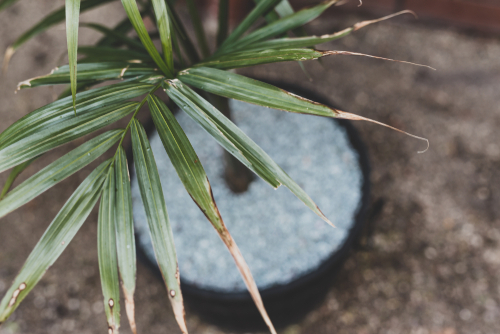
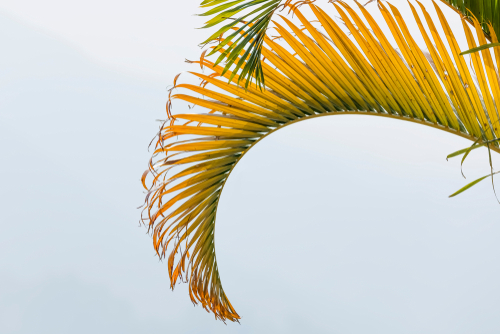
Feather palms (like the Areca or Parlor palm), on the other hand, have a long central rib. Individual leaflets branch off from this rib, giving the whole frond a soft, feathery appearance.
The “Imposter” Palms
In everyday conversation, we call a lot of things “palms” just because they look the part. The Yucca is probably the most famous example of this. Dragon trees and Ponytail palms are also “fake” palms. Botanically speaking, they belong to entirely different plant families:
- The Yucca (or Spanish Dagger) is actually part of the Agave family.
- The Dragon Tree (Dracaena) belongs to its own genus within the Asparagus family.
- The Ponytail Palm (also known as a Bottle Palm or Elephant’s Foot) is actually a succulent tree, also from the Asparagus family.