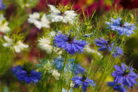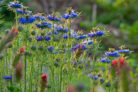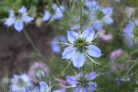
Did you know that in the old language of flowers, Love-in-a-Mist symbolizes a girl turning down a suitor? It’s actually a pretty fitting metaphor since this plant is perfectly capable of reproducing all on its own! In this post, I’m going to walk you through what the seeds look like, how to harvest them, and how to use them. Who knows? With a little gardening know-how, you might just win over the heart of this stunning bloom.
What to Look For
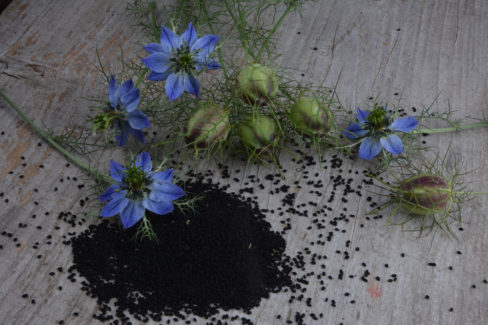
The seeds of Love-in-a-Mist (Nigella damascena) have that classic jet-black color typical of their genus. At first glance, they look almost identical to black cumin, which makes sense since they’re close cousins. Here’s how those seeds develop after the flowers fade:
- They ripen inside a capsule (or seed pod) about an inch long.
- The walls of the pod dry out until they feel like thin parchment.
- You’ll start to see distinct, wide purple stripes running down the sides.
Propagation from Seed
How it Spreads Naturally
Once the blooming season ends, those tiny seeds mature inside the dried pods. But Love-in-a-Mist doesn’t just rely on the wind or pollinators to get the job done. It uses a cool process called “semachory.” Basically, insects get momentarily snagged on the dried styles of the plant; when they pull away, the flower head snaps back like a spring, flinging the seeds out to be carried off by the breeze.
Pro Tip: Unlike some other self-seeding plants that try to take over the whole yard, Love-in-a-Mist is pretty well-behaved. You don’t have to worry about it spreading like a weed!
Harvesting Your Own Seeds
If you want to take control of where they grow next year, you can easily collect the seeds yourself. The best time to do this is in September or October. My favorite trick? Cut the entire flower stalks and shake them out over a plain sheet of white paper. Those little black seeds will pop right out against the white background, making them super easy to collect.
How to Use Them
These seeds aren’t just for planting! Since Love-in-a-Mist is related to black cumin, the seeds are actually edible. They have a really unique flavor profile—think a mix of woodruff and strawberry. They make a fantastic, unexpected spice when sprinkled over fresh bread spreads.
Just a heads-up, though: don’t go overboard! Eating too many can lead to a bit of a stomachache or bloating, so use them sparingly.