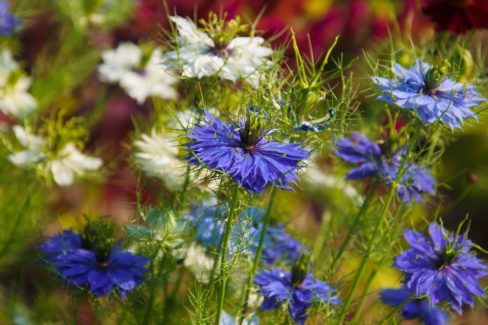
Love-in-a-Mist (Nigella damascena) is definitely not your average garden plant. With its delicate, pale blue blossoms, it’s a stunning addition to any flower bed. But there’s more to this plant than just good looks—its seeds can actually be used to spice up your favorite dishes! Plus, it’s the ultimate “starter plant” for beginners because it’s incredibly low-maintenance. In this guide, I’ll walk you through everything you need to know about its unique look and how to keep it happy in your garden.
General Information
Love-in-a-Mist, known botanically as *Nigella damascena*, is a flowering beauty from the buttercup family (*Ranunculaceae*). Because it looks so striking, it’s become a real fan favorite over the years. You can tell how much people love it by the poetic nicknames it has earned around the world:
- Damask Black Cumin
- Devil-in-a-Bush
- Ragged Lady
- Jack-in-the-Green
- Hair of Venus
- Turkish Black Cumin
Most of these names hint at its botanical relatives, but some come from old folklore. In parts of Europe, it’s associated with stories of unrequited love, where the delicate flower symbolizes a young girl. One famous legend tells of two neighbors, Gretl and Hansel, whose fathers forbade them from being together. Gretl hid in the bushes waiting for her love, but just as they spotted each other, an invisible force turned them both into flowers so they could be together forever.
Origin
Love-in-a-Mist originally hails from the Mediterranean. However, it’s been a staple in Northern European gardens for centuries and has adapted so well that you can even find it growing wild in many places today.
Characteristics and Features
This is a classic summer flower with a bit of an exotic flair. Just keep in mind that it is an annual, meaning it completes its life cycle in one season.
Growth
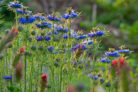
It’s easy to see why this plant catches the eye—*Nigella damascena* can grow up to 20 inches (about half a meter) tall.
The Bloom
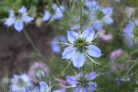
The flower is undoubtedly the star of the show. It features five large petals (technically sepals) that are traditionally blue. Thanks to natural variations and breeding, you can now find varieties in white or pink, with some being double-bloomed for extra fluffiness. No matter the color, you can expect them to pop from June through August.
Care Tips
Thinking about adding some Love-in-a-Mist to your own backyard? Here’s the lowdown on how to care for it.
Choosing the Right Spot
This plant is a dream for beginners because it’s not picky at all. It will grow in almost any garden soil, though it might stay a bit stunted or skip blooming if the soil is too nutrient-poor. Since it’s a “medium feeder,” it loves soil that is:
- Sandy
- Rich in organic matter (humus)
- Well-draining
A sunny spot will really help it reach its full potential!
Watering
Love-in-a-Mist is surprisingly drought-tolerant. You won’t need to reach for the watering can very often. Even in full sun, it only needs a drink on those really scorching summer days. That said, regular watering does encourage the plant to keep producing those lovely blooms.
How to Plant Love-in-a-Mist
Ready to get your hands dirty? Here’s how to plant them:
- Best time to sow: May is ideal, but September and October work too for a head start next year.
- Spacing: Create rows about 10 inches (25 cm) apart.
- Soil prep: Mix a little compost into the furrows.
- Sowing: Space seeds about 6 inches (15 cm) apart.
- Depth: Don’t bury them too deep—no more than 1/2 inch (1 cm).
- Thinning: A few weeks after they sprout, thin them out so there’s about 8 inches (20 cm) between plants.
Pro Tip: The seeds like temperatures between 60°F and 65°F (15°C–18°C) to germinate. If you chill them at 40°F (5°C) for a bit before planting (stratification), they’ll often grow even faster!
Propagation
Love-in-a-Mist is great at taking care of its own future. It uses a cool method called “semachory.” As the plant dries out, the seed pods become like little shakers. When insects or the wind hit the plant, it snaps back and flings the seeds out. You can also harvest the seeds yourself and scatter them exactly where you want them.
Pro Tip: Even though it self-seeds easily, don’t worry about it taking over your whole yard—it’s usually very well-behaved.
Is it Winter Hardy?
Unfortunately, no. Love-in-a-Mist won’t survive a hard freeze. It generally struggles once temperatures drop below 40°F (4°C).
Pests and Diseases
Good news here! You don’t really have to worry about pests or diseases with this one. It’s remarkably hardy and, best of all, slugs and snails usually leave it alone.
Ways to Use It
Whether growing wild or in a manicured flower bed, Love-in-a-Mist looks right at home—especially in a rustic cottage garden style.
In the Garden Bed
It’s the perfect “filler” plant for perennial beds. It looks absolutely harmonious when paired with other summer favorites like Dahlias or Coneflowers (Echinacea).
The Seeds
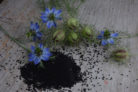
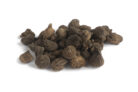
The beauty isn’t just skin deep! The seeds are edible and look a lot like black cumin (their close relative). A word of caution, though: unlike regular black cumin, these seeds contain an alkaloid called damascenine. In huge quantities, it’s not good for you, but in small amounts as a spice, it’s perfectly safe and totally delicious. The flavor is a wild surprise—it tastes like a mix of strawberry and woodruff! It’s best used ground up.
Pro Tip: Try sprinkling the ground seeds over a piece of bread with cream cheese. The contrast of the black spice on the white spread looks as cool as it tastes!
To use them in the kitchen, harvest the seed pods in September or October.
Pro Tip: Once you’ve emptied the pods of their seeds, don’t toss the shells! The dried seed capsules look amazing in floral arrangements and bouquets. They pair beautifully with dried flowers like Strawflower, Yarrow, or Statice.