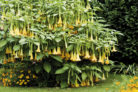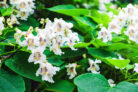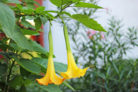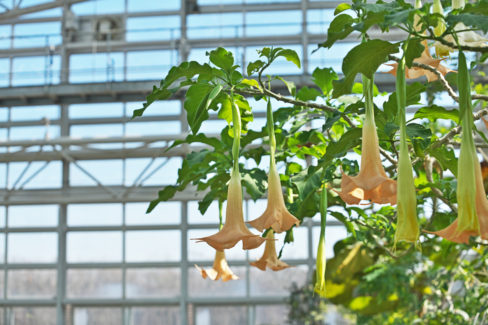
Originally hailing from South America, Angel’s Trumpets have a pretty diverse background. Some species are native to the high-altitude Andes mountains, while others thrive in the humid lowlands of the Amazon. But they all have one thing in common: they absolutely cannot handle a frosty winter. If you live in a climate with freezing temperatures, you’ll need to bring your Angel’s Trumpet indoors to keep it happy until spring.
Keep it Cozy
When it comes to overwintering, temperature is everything. You’ll want to keep your plant in a spot that stays at least 50°F (10°C). Interestingly, these plants don’t mind standard room temperatures (around 68°F or 20°C) even during their dormant phase. However, a quick word of caution: if you’re planning on keeping your Angel’s Trumpet in your main living area, make sure it’s out of reach of kids and pets. These beauties are toxic if ingested!
Let There Be Light
While Angel’s Trumpets aren’t huge fans of excessive heat (which dries out their soil way too fast), they absolutely crave sunlight—even in the winter. If you have a sunroom or a bright window, that’s the perfect spot. If you don’t have a bright area, you *can* keep them in a darker room, but be prepared for the plant to drop its leaves. It’s not the end of the world, but it does mean the plant will take a lot longer to bounce back in the spring. If you want to ensure a spectacular blooming season, finding a well-lit location for the winter is definitely the way to go.
Skip the Fertilizer, Ease Up on the Water
To help your Angel’s Trumpet settle into its winter nap, you should stop fertilizing back in the fall. As the flowers start to fade in early autumn, the plant’s energy needs drop significantly. By the time winter hits, it doesn’t need any fertilizer at all. Its thirst levels will also take a dip. During the cold months, only water your plant when the top third of the soil feels completely dry to the touch.
To recap, here’s your winter checklist for a healthy Angel’s Trumpet:
- Keep it in a warm spot
- Give it as much natural light as possible
- Stop all fertilizing
- Cut back on watering