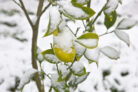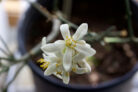
Since lemon trees are total sun-seekers and can’t handle the frost, you can’t just plant them in your backyard if you live in a cooler climate. Instead, they need to live in pots so you can bring them indoors before the first night frost hits.
Winter Care
Generally speaking, you have two options for overwintering your lemon tree (Citrus x limon):
- The “Cold” Method
- The “Warm” Method
If you have the choice, the cold method is usually the way to go!
The Cold Method
The Right Spot
For a cold winter dormancy, your lemon tree needs a spot that is:
- Very bright and sunny
- Kept at a steady temperature between 40°F and 50°F (5°C to 10°C).
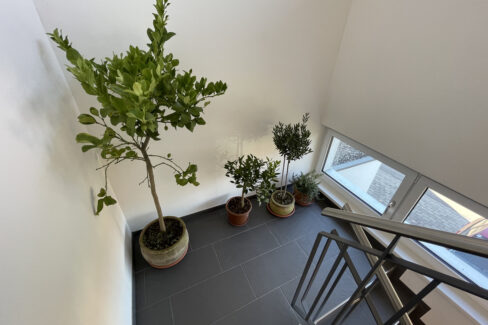
A cool sunroom or an unheated (but frost-free) stairwell are usually the most popular winter homes for these little trees.
Maintenance
Since your lemon tree goes into a resting phase during a cold winter, you can take it easy on the chores.
- Watering: You’ll only need to give it a drink about once a month.
- Fertilizing: Stop giving it nutrients entirely until spring.
The Warm Method
The Right Spot
If you go with the warm method, your lemon tree stays in a normally heated room. If you do this, it is absolutely vital that you find a very bright location. Just make sure it’s not sitting right next to a heater—that dry air is really tough on citrus trees.
Maintenance
Even with a warm winter, you should scale back the care a bit, but not as much as the cold method. Because of the indoor heat, the tree will be thirstier. You should also continue to fertilize it every few weeks.
Dealing with Leaf Drop
If your lemon tree starts dropping leaves during a cold winter, check the floor temperature. If the floor is much colder than the air, the roots “fall asleep” and can’t absorb enough water to support the tree. Try putting a wooden board or a piece of Styrofoam under the pot to protect it from “cold feet.”
Another culprit is lack of light. If it’s too dark, keep the tree where it is but cut back on the water even more.
If your tree is dropping leaves during a warm winter, it’s usually a sign that it’s simply thirsty.
Pests
No matter which method you choose, keep an eye out for spider mites, which love to move in during the winter months. The quickest way to deal with an infestation is to prune away any affected branches.