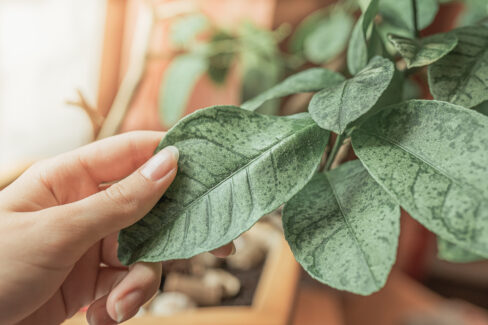
Spider mites are some of the most stubborn pests you’ll ever deal with in your indoor garden. They have a nasty habit of popping up out of nowhere, and just when you think you’ve finally won the war, they reappear weeks or even months later.
Signs of Damage
Spider mites absolutely love hot, dry conditions. While they can bother your lemon tree any time of year, they are tiny—we’re talking 0.25 to 0.8 millimeters tiny—so you probably won’t see the actual bugs with the naked eye. Plus, they love to hide on the undersides of leaves. Even if you can’t see them, they leave behind two major “calling cards”:
- Leaf discoloration
- Fine webbing
Leaf Changes
When spider mites start snacking on your lemon tree, they pierce the leaves to suck out the nutrients. Here is what to look for as the infestation progresses:
- Early stages: Tiny yellowish speckles or dots on the leaves.
- Next: The leaves take on a weird, silvery sheen.
- Final stages: Leaves turn grayish-brown, dry out, and eventually drop off the tree.
Webbing
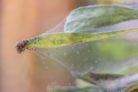
These pests create fine, silky webs, usually starting at the tips of new growth or around flower buds. Because the silk is so delicate, it’s easy to miss until it has completely covered a bud or the “armpit” where a branch meets the main stem.
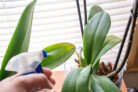
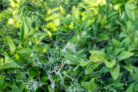
Pro tip: If you suspect you have mites but can’t see anything, give your lemon tree a light misting with water. The tiny droplets will catch on the webs and shimmer in the light, making them much easier to spot!
How to Get Rid of Them
There are a few ways to tackle a spider mite problem. First things first: isolate your lemon tree immediately so the mites don’t hitch a ride to your other houseplants!
Pruning
If you’re already seeing webs, the most effective move is a radical pruning. I know, I know—it hurts to cut back a beautiful tree, but sometimes it’s the only way to save its life. On the bright side, lemon trees usually bounce back and grow even bushier after a good trim.
The Plastic Bag Method
Spider mites absolutely hate humidity. You can use this against them by creating a DIY greenhouse:
- Place a clear plastic bag over the entire tree and its pot.
- Seal the bag tightly to trap the moisture inside.
- Leave it in a warm, bright spot for about a week (just keep it out of direct, scorching sunlight so you don’t cook your plant!).
- Remove the bag and keep a very close eye on the leaves for the next few days.
Chemical Treatments
You can find chemical sprays at the garden center, but they aren’t always a silver bullet. Spider mites are famous for developing resistance to certain pesticides, so natural methods or rotating your treatments often works better in the long run.