
Low-growing perennials are the unsung heroes of the garden. They’re perfect for tucking into the front of your flower beds or creating a beautiful, living border along a walkway. Today, I’m sharing seven of the most popular low-growing, cold-hardy perennials that will return year after year, plus one “pro tip” plant you’re going to love.
[[pflanzen]]
++Bugleweed (Ajuga reptans)
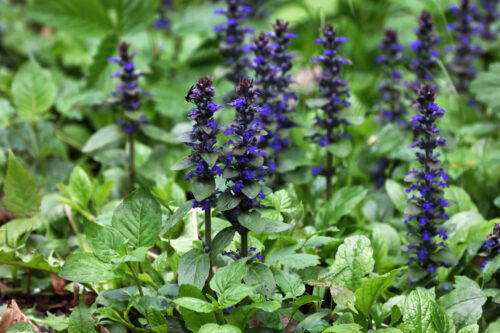
This native wildflower is a real multitasker. Between April and June, it sends up upright flower spikes about eight inches tall in shades of white, pink, or deep violet. But the real showstopper is the foliage—the leaves have a metallic sheen and can range from deep green to chocolate brown or even reddish-purple. Bugleweed is incredibly adaptable and fully winter-hardy, thriving in both sun and part-shade. Just a heads-up: it loves to spread, so plant it in a spot where it has room to roam!
++Snow-in-Summer (Cerastium tomentosum)
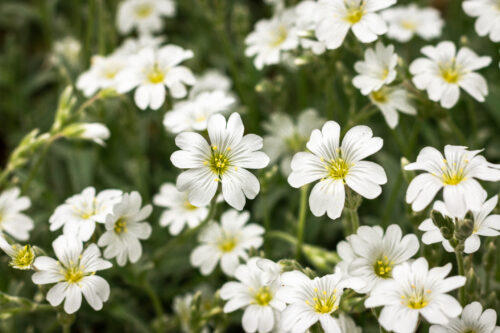
When Snow-in-Summer blooms in May, it really lives up to its name. These low-growing mounds (only 4 to 8 inches high) get covered in bright white, funnel-shaped flowers that look like a fluffy white cloud. After the flowers fade, you’ll see the tiny, horn-shaped seed pods that give it its botanical name. The silvery-grey foliage stays on the plant even through the winter. It’s tough, heat-tolerant, and perfect for those tricky garden spots where nothing else seems to grow.
++Candytuft (Iberis sempervirens)
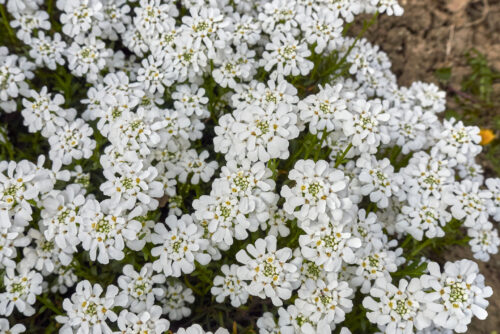
If you have a sunny spot, Candytuft is a must-have. While it’s very cold-hardy, it absolutely loves the sun. It grows into attractive cushions about a foot tall. Starting in April, it produces so many white flowers that you can barely see the dark green leaves underneath! Plus, it’s a total magnet for bees and butterflies looking for an early-season snack.
++Rock Cress (Aubrieta Hybrids)
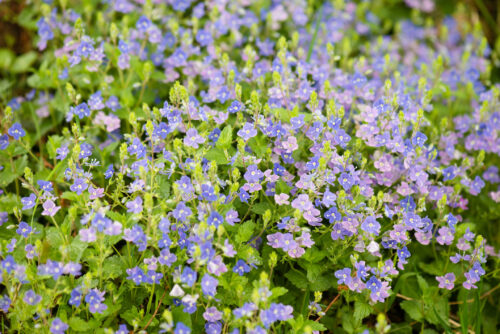
These low-growing, hardy perennials are rock garden classics. From April to May, they burst into a carpet of blue, white, pink, or red flowers. They are fantastic for planting near spring bulbs like tulips or daffodils because they do a great job of hiding that messy, yellowing bulb foliage once the blooms are done. They’re super low-maintenance, though I recommend giving them a quick trim after they flower to keep the growth nice and dense.
++Barrenwort / Fairy Wings (Epimedium)
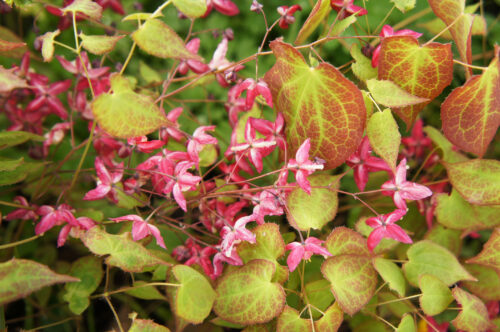
The heart-shaped leaves of the Epimedium are stunning on their own, especially since they often turn a beautiful bronze or reddish hue in both the spring and fall. In April and May, these 10-inch tall plants produce delicate, airy clusters of flowers in colors ranging from yellow and orange to red and violet. They prefer dappled shade and are incredibly long-lived, making them a perfect “set it and forget it” plant for woodland gardens.
++Tickseed (Coreopsis)
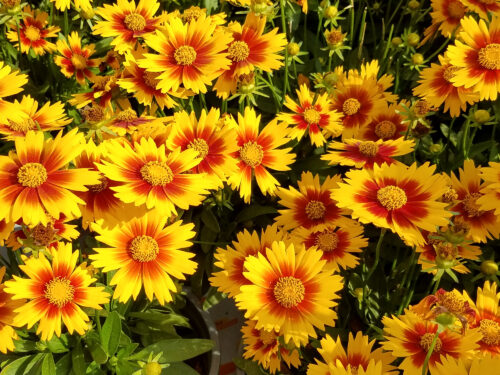
For a splash of pure sunshine, go with the low-growing varieties of Coreopsis. These hardy perennials bloom from late May all the way through August. They thrive in full sun and are actually quite drought-tolerant once established—just make sure they have good drainage, as they don’t like “wet feet.” They also make wonderful cut flowers for summer bouquets and last a surprisingly long time in a vase.
++Cranesbill / Hardy Geranium (Geranium)
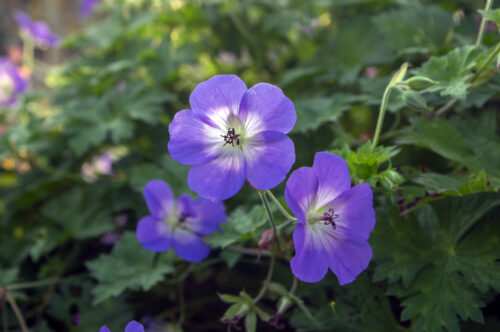
Hardy Geraniums (not to be confused with the annual Pelargoniums) are garden staples for a reason. Most Cranesbill varieties grow wider than they do tall, making them excellent groundcovers for sun or part-shade. Their dainty flowers come in white, pink, or violet and have a lovely light fragrance that bees and hoverflies adore. Plus, their deeply lobed foliage looks great all season long.
%%Irish Moss (Sagina subulata)
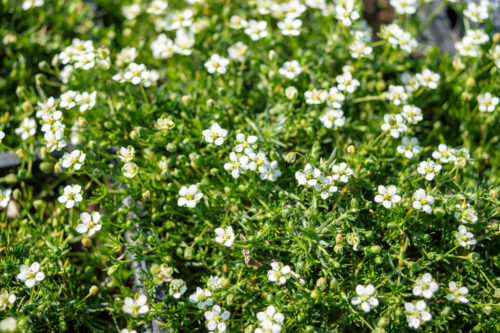
Here is my “secret tip” for you! This tiny perennial forms a dense, evergreen carpet that only reaches about 2 to 4 inches in height. From June to August, it’s covered in tiny, star-shaped white flowers. While it looks like moss, hardy Irish Moss is actually a flowering plant. It doesn’t like the scorching sun, so keep it in a shady, moist spot—it’s perfect between stepping stones or in a fairy garden!