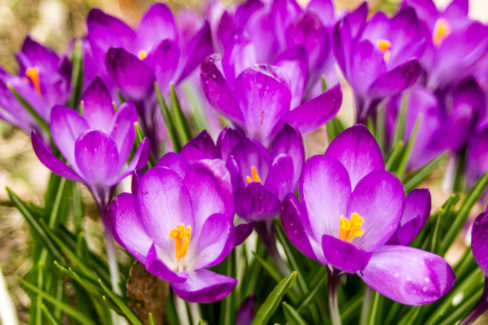
One crocus here, another one there, and suddenly your entire lawn is glowing in shades of white, yellow, and purple. You might be wondering: did these little spring beauties just plant themselves? It’s definitely possible! While crocuses are great at spreading on their own, you can also take the reins and multiply them yourself. This guide will walk you through the best tips and tricks for propagating your crocuses like a pro.
Natural Propagation
The best part about crocuses? You don’t actually *have* to do anything to get more of them. These early bloomers naturally produce what we call “cormlets” or offset bulbs. During the first year, these little guys focus on developing a new flower. By the second year, the crocus uses these offsets to reproduce. Over time, more and more flowers will pop up around the original plant until you’ve got a stunning carpet of color. All it really takes is a little patience!
Pro Tip: If your impressive carpet of crocuses suddenly starts thinning out, you might have voles. These little critters love to snack on the underground bulbs, which unfortunately kills the plant.
Using Offset Bulbs for Propagation
If you want to be more intentional about where your crocuses grow, you can dig up these offset bulbs anytime and move them to a new spot in your garden.
Pro Tip: Crocuses are sun-worshippers, so pick a spot that gets plenty of light.
You can also store crocus bulbs indoors if you aren’t ready to plant them yet. However, to get them to bloom, you’ll need to mimic winter through a process called stratification. This prevents the bulb from sprouting too early. The easiest way? Just pop the bulbs in your refrigerator for about ten weeks before planting.
Can You Grow Crocuses from Seed?
Technically, yes, you can grow crocuses from seed, but it’s a bit of a gamble and rarely successful for the average gardener. Store-bought seeds often fail to bloom, and hybrid varieties usually won’t produce new plants at all. Plus, using offset bulbs is much faster—they usually bloom in their very first year and grow much stronger. But, if you’re feeling adventurous and want to give seeds a try, here’s how to do it:
- Scatter the seeds over a wide area in your chosen spot.
- Lightly cover the seeds with a thin layer of soil.
- Gently press the soil down to make sure the seeds have good contact with the earth.
Pro Tip: Make sure to get your seeds in the ground before the first winter frost hits.