The Pothos (botanical name *Epipremnum aureum*) isn’t just a gorgeous, low-maintenance foliage plant—it’s also incredibly versatile. Whether you want to green up your home office or share the plant love with friends, it’s definitely worth learning how to propagate your own.
Propagation
The best time to start new Pothos babies is in the spring. You’ve got two main ways to do it:
- Stem cuttings
- Layering
Forget about growing them from seeds; as an indoor plant, the Pothos almost never produces a flower, so seeds aren’t really an option.
Stem Cuttings
Using stem cuttings is the easiest way to grow new plants from a healthy, vibrant mother plant.
Taking the Cuttings
To take a tip cutting, snip off a piece that is:
- About 3 to 6 inches long
- Has three to four leaf nodes (those little bumps where leaves grow)
- Taken from the end of a vine
If you want to make several cuttings at once, you can cut off a longer vine and then section it out. Just a pro-tip: make sure you keep track of which end is the “bottom” (the side that was closer to the roots) so the plant knows which way to grow!
Rooting Your Cuttings
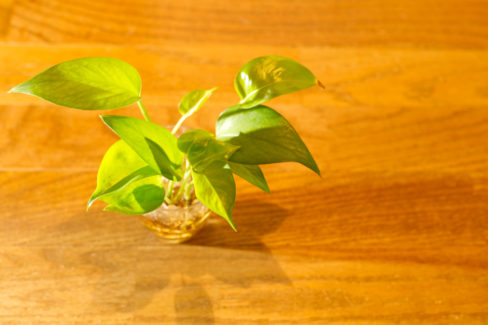
If you’re planning on growing your Pothos in hydroponics or using it for an aquarium, simply pop each cutting into a glass of water. Place it in a bright, warm spot to help it thrive. Once the roots are about an inch long, you can move the young plants into a pot with clay pebbles or hang them directly into your fish tank.
Prefer the traditional route? You can also root them directly in soil. Here’s how:
- Stick the tip cuttings about an inch deep into a pot filled with seed-starting mix.
- Mound the soil slightly around the stem and press down gently for stability.
- Mist the soil with water.
- Cover the pot and cutting with a clear plastic bag to create a mini-greenhouse.
- Place it in a warm, bright spot.
- “Burp” the bag every two days by opening it for a few minutes to let in fresh air.
Once you see new growth starting to sprout, you can ditch the plastic cover. When the young plants look strong and established, you can move them to their own individual pots or a larger decorative planter.
Layering
With layering, the “baby” plant stays attached to the mother plant while it develops its own roots. Since you need a pretty long vine for this, it’s not the best method for very young plants.
Step-by-Step Guide
- Take a long, healthy vine and lay it across the soil surface in the mother plant’s pot.
- Alternatively, place a separate pot filled with soil next to the main plant and lay the vine across that.
- Secure the vine to the soil surface using hairpins or floral wire.
- Make sure the very tip of the vine is pointing upward.
- Give it a light watering.
Since the offshoot is still connected to the mother plant, it doesn’t need much extra help. If you’re rooting it in a separate pot, just keep that soil slightly moist. As soon as the runner has taken root and starts growing on its own, you can snip the “umbilical cord” connecting it to the mother plant.
If you rooted it in the original pot, now is the time to move it to its own home. Give your new plant a bright, warm spot and care for it just like a grown-up Pothos!