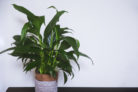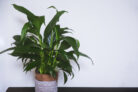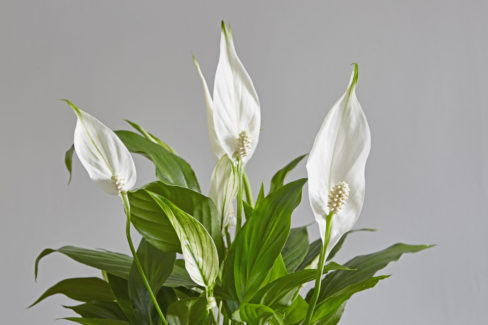
The Peace Lily (also known as *Spathiphyllum*) is a gorgeous, leafy houseplant famous for its glossy, deep green foliage. Since these plants grow in clumps rather than branching out like a tree, they don’t get super tall. This means you don’t really *have* to prune them to keep them under control.
Pruning
You won’t need to do any major “shaping” or heavy structural pruning with a Peace Lily. However, there are a few times when you’ll want to grab your shears to keep your houseplant looking its best:
- Faded flowers
- Dried-out leaves
- Pests or disease
Faded Flowers
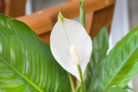
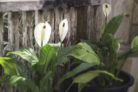
Peace Lily blooms are famous for lasting a long time, but eventually, they’ll start to wither. If those fading blooms are bothering you, go ahead and snip them off. To avoid leaving behind “naked” leafless stalks, try to cut them as low as possible near the base of the plant. Pro tip: If you wait until the flower and stem are completely dried out, you can usually just give them a quick, firm tug and they’ll pop right out!
Dried Leaves
You can handle brown or crispy leaves the same way as the flowers. If you’re using scissors, cut them off as close to the base as you can. Otherwise, wait until they are totally dry and give them a sharp tug to pull them out. This is actually way easier for larger Peace Lilies since you don’t have to go hunting through the dense foliage for the bottom of the stem.
Diseases and Pests
If your plant is dealing with a bug infestation or a disease, you’ll want to act fast. Along with your usual treatments, it’s a good idea to prune away any affected parts immediately. Just make sure to disinfect your shears between every single cut so you don’t accidentally spread the problem to healthy parts of the plant.
Thinning Out a Large Plant
It’s always a win when a Peace Lily grows lush and bushy, but sometimes they can get a little *too* big for their britches (or their spot on the shelf). While you could technically use shears to thin it out, that often leaves the plant looking a bit choppy. Instead, I recommend dividing the plant. This way, you can keep one part in its original spot, and the “new” plants you get from propagating can be:
- Moved to other rooms in your house
- Given away as gifts to friends