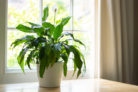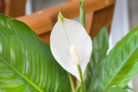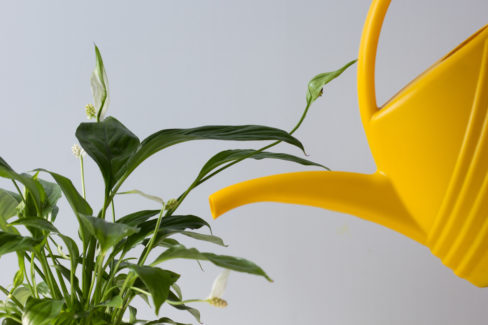
Even though the Peace Lily (also known as Spathiphyllum) is a pretty low-maintenance roommate, it’s definitely not a cactus—it can’t survive without a steady supply of water. In fact, these plants are famous for being a bit dramatic when they get too dry. To keep yours happy, you’ll need to get on a regular watering schedule.
How often should you water?
There’s no “one size fits all” answer here because how often your Peace Lily needs a drink depends entirely on its location. A plant sitting in a bright, warm spot is going to be much thirstier than one tucked away in a cooler, darker corner.
Seasonality matters, too! These houseplants need more hydration during hot summer days than they do in the spring or fall. And if yours is sitting near a heater in the winter, that dry air will suck the moisture right out of the soil.
Since there’s no magic calendar for watering, your best bet is the “finger test.” Feel the surface of the soil:
- If it feels springy or elastic, there’s still plenty of moisture in there.
- If it’s firm and hard to press, it’s time to give your plant a drink.
- If it’s rock hard, your soil is bone dry, and your Peace Lily is likely screaming for water!
Watch out for standing water
While Peace Lilies love moisture, they hate “wet feet.” Standing water leads to root rot, which is a silent killer. Usually, by the time you notice drooping leaves from rot, the damage is already done.
To prevent this, always use a pot with at least one drainage hole so excess water can escape into a saucer. It’s also a great idea to add a drainage layer (like pebbles or broken terracotta bits) at the bottom of the pot. Pro tip: Always empty the saucer about 15 minutes after watering so the soil doesn’t soak up the excess from the bottom.
The best water to use
Peace Lilies are surprisingly sensitive to temperature—and that goes for their water, too! Cold water straight from the tap can shock their system. Always aim for lukewarm water instead.
These plants are also a bit picky about minerals like lime and chlorine. Rainwater is the gold standard if you can get it. If you’re using tap water, let it sit in your watering can overnight. This allows the chemicals to dissipate and lets the water reach the perfect room temperature for your leafy friend.