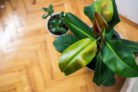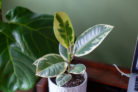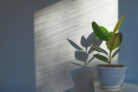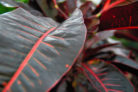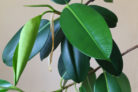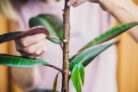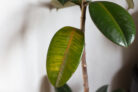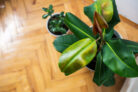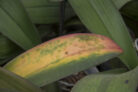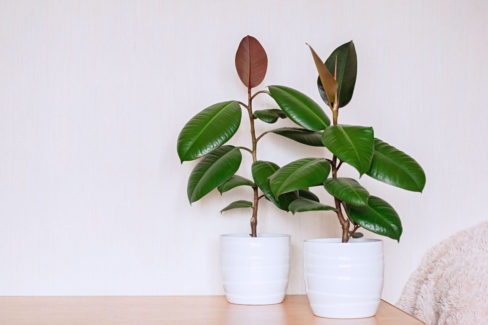
If your Rubber Tree (*Ficus elastica*) is starting to show brown leaves, it’s more than just an eyesore—it’s basically your plant screaming “SOS!” When those glossy green leaves turn dark, it’s a sign that your plant is struggling, and if you don’t step in, you might lose it altogether.
The Root Causes
There are a few reasons why a Rubber Tree develops brown spots. Sometimes, yellow leaves eventually transition into brown, but other times, the brown patches appear out of nowhere. Most of the time, the culprit is one of two things:
- Overwatering (Soggy soil)
- The wrong environment
Dealing with “Soggy Feet” (Overwatering)
We all want to be good plant parents, but sometimes we love our plants to death with the watering can. If your *Ficus elastica* sits in standing water, the roots can’t breathe and will start to rot. This usually shows up as yellowing or browning leaves. Since root rot is a death sentence if left unchecked, you need to act fast.
The best “First Aid” for a waterlogged Rubber Tree is to get it into dry soil immediately. Take the plant out of its pot, trim away any mushy, rotting roots, and repot it into fresh, dry substrate. Hold off on watering again until you see signs that the plant has bounced back.
To keep this from happening again, make sure your pot has plenty of drainage holes and consider adding a layer of pebbles at the bottom. Always check the soil before you water!
Location, Location, Location
If your Rubber Tree isn’t happy with its spot in the house, it’ll let you know by dropping or discoloring its leaves. Here are a few things that can stress it out:
- Not enough light
- Low humidity (dry air)
- Drafty areas
- Temperatures dropping below 60°F (15°C)
Sunburn is Real
While these plants love light, too much direct sun can actually scorch the leaves, leaving behind brown, crispy patches. An east- or west-facing window is usually the “sweet spot.” If you have it in a south-facing window, make sure it has a sheer curtain to protect it from that intense midday sun.
If you decide to move your Rubber Tree outdoors for the summer, make sure it has some shade during the hottest part of the day. Also, don’t just stick it outside all at once—gradually acclimate it to the sun over a week or two to prevent “sun shock.”
Winter Drafts
Rubber Trees are sensitive to drafts year-round, but cold winter air is their kryptonite. Avoid placing your plant right next to a door or window that you open frequently for ventilation during the winter. That sudden blast of cold air can cause the leaves to brown and drop before you know it.