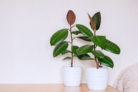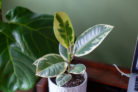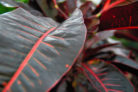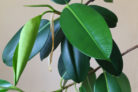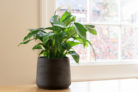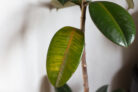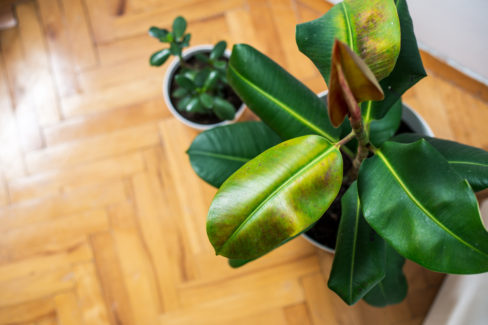
Let’s be honest: we grow the Rubber Tree (*Ficus elastica*) for those gorgeous, glossy leaves. Since the flowers are pretty much non-existent when grown indoors and the fruit isn’t edible, those big green leaves are the whole show! That’s why it’s such a bummer when you start seeing ugly brown spots popping up.
What’s Causing Those Brown Spots?
There are a few different reasons your plant might be struggling, but they usually fall into one of three categories:
- Leaf spot disease
- The wrong location
- General care mistakes
Leaf Spot Disease
Leaf spot is usually caused by various types of fungi. These fungi tend to pick on Rubber Trees that are already feeling a bit “under the weather” due to things like:
- Pest infestations
- Cold drafts
- Sunburn
- Nutrient deficiencies
- Not enough light
- Air that’s too dry
A fungal infection can strike any time of year and spreads surprisingly fast. Since these spores can jump to your other houseplants, the first thing you should do is move your infected Rubber Tree into “quarantine” away from your other green friends.
Here is what to look for:
- Yellowish, gray, reddish, black, or brown spots
- Round or oval shapes
- Often featuring a dark border
- Tiny black fungal fruiting bodies inside the spots
- Spots that start small but grow larger as the infection spreads
- Random patterns across the leaf surface
How to handle leaf spot:
- Fix any underlying care issues to boost the plant’s immune system.
- Use a specialized fungicide to kill off the fungus.
Should you cut off the infected leaves? It’s a bit of a toss-up. Removing them can help stop the fungus from spreading, but losing too many leaves can stress the plant out even more. Use your best judgment based on how many leaves are affected!
The Wrong Location
If your Rubber Tree is sitting in a spot it doesn’t like, you’ll often see large brown patches appearing specifically at the leaf tips or along the edges.
Cold Temperatures
Rubber Trees hate a chill. If your plant is sitting in a drafty spot during the winter—like right next to a window or balcony door you open for fresh air—the cold air can cause brown damage on the foliage.
Sunburn
Just like us, plants can get a nasty sunburn if they get too much direct rays. If your Rubber Tree is outside in the summer sun without any shade, you might see big brown scorched spots by that very evening. If it’s indoors, try to keep it out of intense, direct midday sun, especially during the hottest months.
Care Mistakes
If it’s not a disease and the location seems fine, it’s time to look at your routine. Sometimes being “too nice” (or a little forgetful) can lead to brown tips and edges. Common culprits include:
- Root rot from overwatering (standing water is the enemy!)
- Over-fertilizing
- Nutrient deficiencies
- Dehydration (letting the soil get bone-dry for too long)
The best fix for these spots is simply adjusting your routine to match what a Rubber Tree actually needs. Once you find that “sweet spot” with watering and feeding, your plant will thank you with beautiful, spot-free growth!