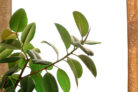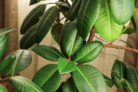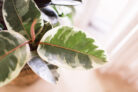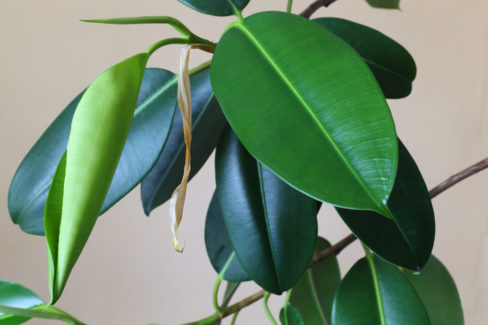
The Rubber Tree (botanically known as *Ficus elastica*) is famous for being a tough, low-maintenance houseplant. But even the hardiest green roommates can run into trouble sometimes. When a Rubber Tree gets sick, it usually “talks” to you through its leaves, so it’s a great idea to give them a quick once-over every time you water.
The Root Causes
Most of the time, a sick Rubber Tree is a stressed Rubber Tree. If the care routine isn’t quite right or the plant is sitting in a spot it doesn’t like, its “immune system” weakens, making it an easy target for pathogens. Other times, the “disease” is actually just a direct result of a care mishap.
Care Mistakes as Triggers
Some of the most common issues aren’t actually contagious—they’re physiological reactions to their environment. These include:
- Root Rot
- Chlorosis
Root Rot
Root rot is a serious bummer. It causes the roots to literally decay, meaning they can no longer send water or nutrients up to the rest of the plant. If you ignore the signs, your Rubber Tree likely won’t make it.
The Cause
Root rot is almost always caused by overwatering and “wet feet” (standing water). This happens when the plant gets too much water and the roots sit in soggy soil for too long without oxygen.
The Symptoms
- Yellowing leaves
- Brown spots or edges
- Drooping or wilting leaves
What to Do
- Gently remove the plant from its pot and trim away any mushy, rotted roots.
- Rinse the healthy remaining roots under lukewarm water.
- Let the plant air-dry for a day or two.
- Repot your Rubber Tree in fresh, dry substrate.
- Hold off on watering for a while to let things stabilize.
Chlorosis
If your Rubber Tree develops chlorosis, it means it’s struggling to produce chlorophyll (the stuff that makes leaves green).
The Cause
- Magnesium deficiency.
The Symptoms
- Leaves turn a pale, sickly yellowish color.
What to Do
- Give the plant a boost with a magnesium-specific fertilizer (like Epsom salts).
- Long-term fix: Use a high-quality complete fertilizer, or switch brands if your current one isn’t cutting it.
When Weakness Invites Trouble
While a stressed plant is a bigger target, even a relatively healthy Rubber Tree can occasionally fall victim to external infections.
Leaf Spot Disease
Leaf spot is a fungal infection that, if left unchecked, can unfortunately be fatal for your plant.
The Cause
Various types of fungi cause these spots. They tend to pounce on weakened plants because the plant doesn’t have the energy to fight back against the spreading spores.
The Symptoms
- Yellow, light brown, reddish, or black spots on the leaf surface.
- Spots are usually round or oval.
- A tiny black dot (the fungal fruiting body) often appears in the center of the spot.
- It can spread incredibly fast across the foliage.
What to Do
- Isolate your Rubber Tree immediately (you don’t want it spreading to your other plant babies!).
- Treat the plant with a specialized fungicide from your local garden center.
- Focus on strengthening the plant by optimizing its location and care routine.
Whether or not you should prune the infected leaves is a bit of a debate in the gardening world. On one hand, cutting them off helps stop the fungus from spreading; on the other hand, losing too many leaves can stress the plant even further. Use your best judgment based on how many leaves are affected!