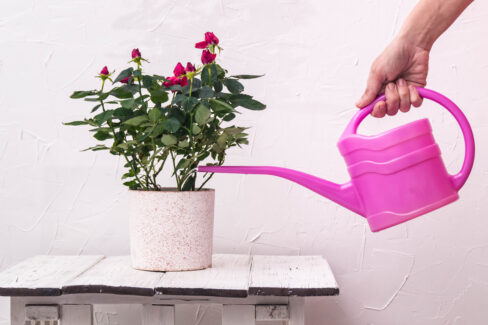
Miniature potted roses are often sold as houseplants, but they’re actually just as happy (if not happier!) outdoors. While they’re every bit as stunning as their full-sized garden cousins, they often struggle indoors because they don’t get the specific care they need. This usually leads to wilted blooms and a plant that doesn’t last long. If you want your potted rose to truly thrive, your best bet is to move it outside or plant it in the ground.
Planting Your Potted Roses
When it’s time to repot, always choose a container that’s at least 4 inches (10 cm) wider than the current root ball. Roses need that extra elbow room for their roots to spread out comfortably. Make sure your pot has plenty of drainage holes so excess water can escape. If you’re using a saucer, be sure to dump out any standing water shortly after watering. I also recommend adding a drainage layer of gravel or broken terracotta pieces at the bottom to prevent “soggy feet.” When planting, position the rose so the graft union sits a few inches below the soil surface. Standard high-quality potting soil works perfectly, but remember: these beauties are hungry and thirsty!
Watering and Fertilizing Like a Pro
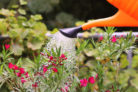
Generally speaking, roses are thirsty plants, and potted versions are no exception. Keeping up with watering is especially crucial during the blooming season. If you follow these quick tips, your rose will keep those gorgeous flowers coming:
- Water deeply and regularly.
- During the blooming phase, check the soil daily to make sure it’s still moist.
- Use rainwater if you can—roses love it!
- Avoid standing water at all costs.
- Don’t skip that drainage layer in the pot.
- Feed them weekly or use a slow-release fertilizer.
For fertilizer, a standard liquid plant food mixed into your watering can once a week works great. You can also use a specialized rose fertilizer—just follow the label instructions. Pro tip: If you mix some horn meal or organic bone meal into the soil when planting, it acts as a natural slow-release fertilizer, meaning you won’t need to worry about feeding them again for several weeks.
Winter Care for Potted Roses
Most potted roses are hardy enough to handle some cold, but they face a unique risk when left in pots during a deep freeze. Because the roots are above ground, the soil can freeze solid, which can kill off those delicate root hairs. To play it safe, it’s best to overwinter your roses in a frost-free spot like a garage or shed. You can skip the fertilizer during the winter months, but don’t let the soil dry out completely—give them a little drink every now and then to keep them hydrated.