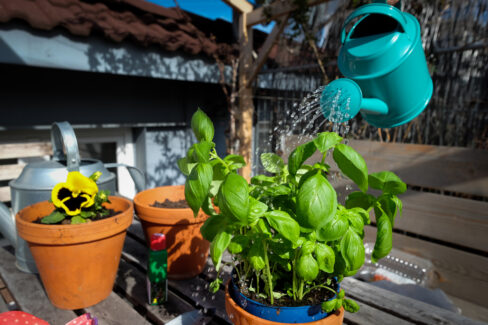
Basil is part of the mint family, but unlike its cousins thyme and rosemary, this kitchen superstar is a total water lover. To keep your basil thriving and prevent it from turning into a wilted mess, you’ve got to get the watering just right. Here’s my guide on how to keep your basil perfectly hydrated.
When does basil actually need a drink?
Basil is a bit of a “Goldilocks” plant—it hates being bone-dry, but it also can’t stand having “wet feet” (soggy roots). Before you grab the watering can, do a quick finger test. Press your index finger into the soil . If it feels damp, hold off. But if the surface feels dry to the touch—kind of like dry sand or crunchy leaves—it’s time to give it some love.
Watering potted basil
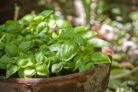
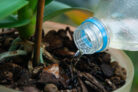
How often you’ll need to water depends entirely on your plant’s location . If your potted basil is sitting on a sunny windowsill behind glass, it might actually need a drink twice a day! Those lush green leaves evaporate water quickly, and you’ll need to top it off frequently to keep up.
Watering basil in the garden
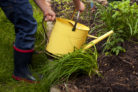
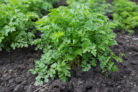
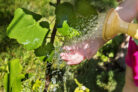
If you’ve planted your basil directly in a garden bed, you won’t have to water it nearly as often as your potted plants. Outdoor plants have more room for their roots to spread out and find moisture deep in the ground. If you notice the leaves looking a bit limp, always check the soil moisture first. Believe it or not, basil reacts to overwatering the same way it reacts to drought: with wilting leaves . If the soil is already soaked and the plant is wilting, you likely have root rot from standing water, which prevents the plant from drinking. Only water if the soil actually feels dry!
Pro tips for watering the right way
- Fill your watering can the day before and let it sit in the sun so the water warms up to room temperature.
- If you can, always use soft water (low in lime/calcium).
- Always do the finger test to check soil moisture before adding water.
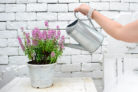
- When the soil is dry, water gently at the base of the plant. Alternatively, you can fill the saucer at the bottom and let the plant soak it up.
- Avoid getting water on those delicate leaves. Wet leaves in the sun can get “burned” or develop unsightly spots.
- Try not to water during the heat of the afternoon. The best time is early morning or in the evening.
Quick Tip: To prevent the dreaded root rot, add some expanded clay pebbles or gravel to the bottom of your container when potting your basil. This creates great drainage so the roots don’t sit in stagnant water. And don’t forget—basil is a “hungry” plant, so fertilizing regularly is key to those big, flavorful harvests!