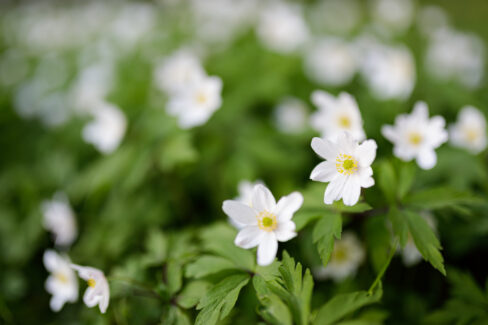
The Wood Anemone opens its delicate buds while the rest of the forest is still deep in its winter slumber. Ever wonder why it wakes up so early? It’s all about survival! Living at the foot of giant trees requires perfect timing. Let’s take a closer look at the fascinating life of this spring messenger.
“Fast” Facts at a Glance
- Scientific Name: Anemone nemorosa
- Common Names: Wood Anemone, Windflower, Thimbleweed, Smell Fox
- Family: Buttercup family (Ranunculaceae)
- Range: Temperate regions of Europe and Asia
- Growth Habit: Perennial, herbaceous, up to 8 inches tall; spreads via underground creeping rhizomes
- Foliage: Spring-green, deeply lobed (resembling buttercup leaves)
- Bloom Time: March and April
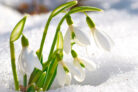
- Flowers: Mostly white; 6 to 8 (rarely up to 12) rounded petals; usually one flower per stem
- Location: Shady to partial shade, typically under deciduous trees
- Fruit: Achenes (resembling tiny nuts)
- Soil: Humus-rich, nutrient-dense, well-draining, and consistently moist
- Propagation: Seed sowing or rhizome division
- Special Note: Toxic/Poisonous
Wild Wood Anemones and Conservation
Wood Anemones are a common sight across the landscape. You’ll mostly find this member of the buttercup family creating stunning white carpets at the base of large deciduous trees. Because it needs plenty of light to grow, it has to get its greenery and flowers out early in the year—well before the trees overhead develop a thick canopy that blocks the sun.
By early summer, the plant has already finished its cycle and retreated back into its rhizome. You can also spot them in floodplains or damp meadows. If you happen to come across a patch while out on a nature hike, you might wonder: can I pick them or just admire them? While some Anemone species are protected, the common Wood Anemone isn’t currently listed as an endangered species, meaning it’s not under strict legal protection in most areas—though it’s always best to leave nature where it grows!
Planting Wood Anemones in Your Garden
The Wood Anemone makes a lovely guest in home gardens, provided you can offer it a dappled spot under deciduous trees or near summer-green shrubs. Just two hours of sunlight a day is plenty for this woodland native. If you’re buying young plants from a nursery, get them in the ground in the spring; if you’re dividing rhizomes, fall is the best time for transplanting. Growing them from seed is a bit of a challenge since they are “cold germinators,” so most gardeners stick to plants or rhizomes. Here are a few quick care tips:
- Give them a little compost in the spring.
- Cover the area with leaf mulch in the fall.
- Make sure the soil stays consistently moist.
Pro Tip:
Wood Anemones have very sensitive rhizomes. Once you’ve finished planting them, try not to disturb the soil anymore. They prefer to be left in peace to do their thing!