When you’re planning a new beech hedge, the biggest question is always: “How many plants do I actually need per foot?” We all want that lush, private screen as fast as possible, but you have to find the sweet spot. Plant them too far apart, and you’re staring at your neighbor for years; plant them too close, and the trees will fight for nutrients and sunlight, stunted by the lack of elbow room.
How many beech saplings should you buy?
The magic number really depends on how big the plants are when you bring them home from the nursery.
Before you start digging, keep these factors in mind:
- The size of the saplings
- How tall you want the finished hedge to be
- Whether you’re buying bare-root or container-grown plants
If you’re starting with older, larger trees, you’ll want a planting distance of at least 20 inches. This usually works out to about two trees per yard (or roughly one every 1.5 feet).
However, if you’re starting with tiny saplings and don’t want to wait forever for coverage, you can pack them in a bit tighter—about three to four plants per meter (roughly 3 feet). Just a heads-up: if you go this route, you’ll likely need to thin them out in a few years, removing every second tree so the remaining ones have enough space to thrive.
Bare-root vs. container-grown plants
When you head to the garden center, you’ll usually see two options: container-grown or bare-root.
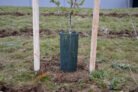
Bare-root plants are sold without any soil around the roots. They are definitely the more budget-friendly option, but they take a little longer to establish and fill out into a solid screen. For these, planting three to four per meter is a good rule of thumb to get things moving.
Propagating your own beech hedge
If you’ve got more time than money, propagating your own plants is a fantastic way to save a few bucks.
One popular method is taking cuttings. In the spring, take snips from an existing beech tree and tuck them into some high-quality potting soil. Be patient, though—it takes at least two years for these cuttings to grow a root system strong enough to be planted out in the garden.
Another trick is “layering.” You take a low-hanging branch, make a tiny nick in the bark, bend it down to the ground, and pin it into the soil. Keep that spot moist, and by next season, you’ll see if it has sprouted its own roots.
Finally, you can always look for “volunteers”—those tiny seedlings that pop up under established trees. In the spring or just before winter hits, you can carefully dig these up and move them right to where you want your new hedge to grow.