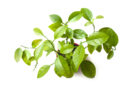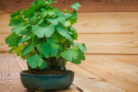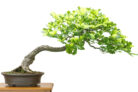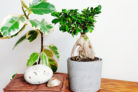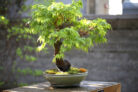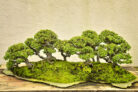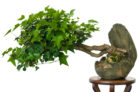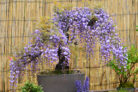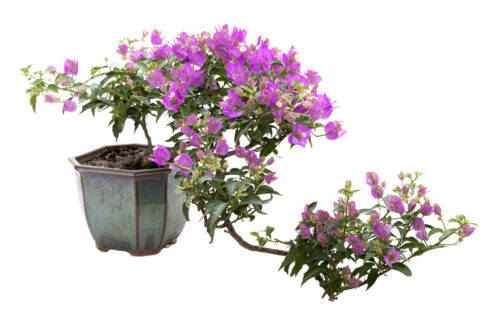
We usually think of the Bougainvillea (or Paperflower) as a wild, sprawling climber that can take over an entire side of a house. Imagining it as a tiny, delicate bonsai might seem a bit out there! But thanks to how well this plant handles pruning, you can actually transform it into a stunning, compact work of art.
Which Bonsai Style Should You Choose?
The Bougainvillea is a fantastic candidate for bonsai because it grows fast, branches out beautifully, and isn’t afraid of the shears. When it comes to styling, the sky is the limit—it really just depends on your skill level. If you’ve got some experience (or a really good guide), you can try your hand at these classic shapes:
- Single trunk (Formal or Informal Upright)
- Multi-trunk
- Standard (Small tree shape)
- Semi-cascade
Pruning and Wiring Tips
The shaping process starts early, right after you’ve successfully propagated your young plant. In the beginning, you’ll likely need to stake it to help it develop a sturdy trunk and a solid base. As it grows, you’ll want to trim back new growth to just one or two pairs of leaves.
Once May hits, put the scissors away unless absolutely necessary—and even then, be very conservative. If you prune too much in late spring, your Bougainvillea won’t bloom. Make sure to deadhead spent flowers promptly, and for older plants, don’t be afraid to thin out the interior branches to keep things looking tidy.
As for wiring? It’s not strictly necessary since you can achieve a great shape just by pruning. However, if you do decide to use wire, keep a close eye on it. These plants grow so fast that the wire can quickly start cutting into the bark if you aren’t careful.
Tailored Care for Your Bonsai
From March through September, your Bougainvillea will be thirsty! Water it regularly and thoroughly, but make sure it never sits in soggy soil. Let the top layer of soil dry out a bit between waterings, and always dump out any excess water from the saucer. In the winter, you can scale back the watering significantly.
For nutrients, use a liquid bonsai fertilizer every one to two weeks from April to September. If you’re looking for something lower maintenance, a slow-release fertilizer works great too. Plan on repotting your little tree about every three years. A mix of 70% bonsai soil and 30% Akadama is the “goldilocks” blend for these beauties.
Wintering Your Bonsai
Your bonsai will love soaking up the sun outside during the summer, but it absolutely must come indoors for the winter. It’ll appreciate a dormant period in a cool spot around 55°F (12°C). If the room is a bit dark, don’t panic if it drops some leaves—it’s just resting and will sprout fresh green growth in the spring. If you keep it in a warm, bright spot, it’ll likely keep its leaves; in that case, keep feeding it about once a month.
Pro Tip:
If you don’t have a bright enough window but really want your tree to keep its leaves all winter, just set up a simple grow light!