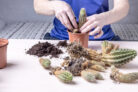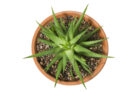
Different cactus species have very different ways of building their delicate root systems. Even though we usually focus on what’s happening above the soil, root care becomes a big deal the moment you decide it’s time for a new pot. I’ve put together some handy tips on how to handle those long root strands so your prickly friends stay happy and healthy.
The Cactus Root System: Shallow Roots vs. Taproots
Generally speaking, cacti fall into two categories when it comes to their roots: taproots (which look a bit like a turnip) and shallow-rooted types. Cacti with taproots are usually much more sensitive to moisture and need less frequent watering. On the other hand, shallow-rooted cacti handle moisture a bit better because they don’t trap standing water quite as easily.
You’ll also want to keep the root type in mind when picking out a home for your plant. Taproot cacti love deep, narrow pots where they can stretch those long roots downward. Shallow-rooted cacti are much happier in wide, shallow planters or bowls.
Fun fact: Most desert cacti are taproot species, using those long, thick roots as extra water storage tanks. Shallow-rooted cacti are more commonly found in rainforests or mountain regions and are often referred to as “leaf cacti.”
The Roots: Your Cactus’s Lifeline
The root system is absolutely essential for a cactus to survive. Whether it’s a taproot or a shallow system, it consists of main roots that branch out into a web of fine feeder roots and tiny root hairs. This network is the “highway” that brings moisture and nutrients into the plant.
While the main roots are permanent and sturdy, those tiny root hairs only live for a few hours or days. Most cacti actually shed these delicate fine roots during a drought and grow them back whenever they sense water is available again.
How to Properly Trim Cactus Roots
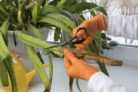
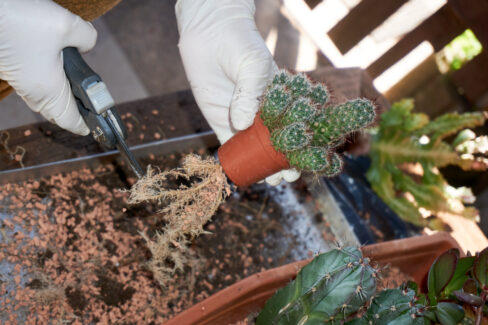
If you notice dead or rotted roots while repotting your cactus, you can give them a professional trim. Just make sure you always use a sharp, sterilized cutting tool. Here’s how to do it:
- Trim away the dead root parts until you reach healthy, green tissue.
- Dust the fresh cuts with charcoal powder to prevent infection.
- Let the plant dry out in a shady spot for about three days.
After that, you’re ready to pot the cactus. Place it in a warm, partially shaded spot so it can recover. Give it a “rest period” of about three weeks before you give it its first drink of water!