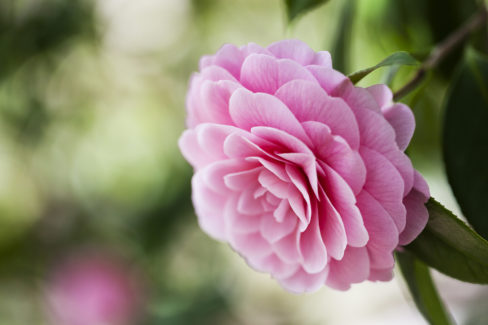
Healthy leaves are the lifeblood of your camellia. That’s why I always recommend giving your plants a regular “check-up”—their foliage will tell you exactly how they’re feeling! If you notice a strange black coating on the leaves, it’s definitely time to do a little detective work.
Sooty Mold
If your camellia leaves look like they’ve been dusted with soot or have a dark brown-to-black film on them, you’re likely dealing with a fungus from the *Capnodiales* order, commonly known as sooty mold. The interesting thing here is that this fungus doesn’t actually “attack” the plant. It just sits on the surface like a webby layer rather than digging into the leaf tissue itself.
The Root Cause
So, why is it there? Well, sooty mold feeds on “honeydew”—that sticky, sugary residue left behind by pests like aphids or scale insects. This is why we usually see sooty mold as a side effect of a bug problem. The real villains are the insects, as they’re the ones sucking the sap and weakening your plant. To save your camellia, you have to deal with the pests first. Once the honeydew is gone, the sooty mold will lose its food source and disappear.
Is Your Camellia in Danger?
The good news is that sooty mold isn’t a direct death sentence since it isn’t a parasite. However, if the coating gets too thick, it acts like a blindfold for the leaves, blocking out sunlight and making it hard for the plant to photosynthesize. This can leave your camellia feeling pretty weak and more vulnerable to other diseases. Think of it as an indirect threat that you shouldn’t ignore.
How to Get Rid of It
Since sooty mold is just a surface coating, you can actually wipe it right off (unlike the sticky honeydew underneath). But here’s the pro tip: don’t just focus on cleaning the leaves. You need to target those sap-sucking insects! Even if the plant starts dropping leaves, the mold itself is mostly a cosmetic issue—the bugs are the real problem you need to solve.
Sooty Mold vs. Black Spot
Don’t let the names confuse you! While they might sound similar, sooty mold and Black Spot (Diplocarpon rosae) are very different beasts. Here’s a quick cheat sheet to tell them apart:
- Sooty Mold: A dark film you can wipe off; always appears alongside aphids or scale (honeydew).
- Black Spot: Black spots on the leaves that won’t rub off; this is a parasitic infection often caused by spores overwintering in the soil; requires much more aggressive treatment.