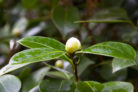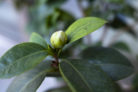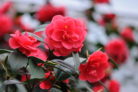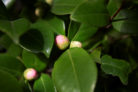
If you notice your camellia’s leaves starting to curl, don’t panic! While it’s a natural reaction, it’s basically your plant’s way of screaming, “I’m thirsty!” You’ll want to act fast to help your camellia bounce back and get back to looking its best.
The Water Balance Act
Just like a lot of other garden favorites, camellias curl their leaves when their internal water balance is off. Think of it as a built-in survival tactic. Even if we can’t see it, plants are constantly losing moisture through their leaves (a process called transpiration). When everything is healthy, there’s a perfect balance between the water evaporating from the leaves and the water being sucked up by the roots.
If your camellia feels like it’s running low on H2O, it tries to conserve what it has left. By curling its leaves, it reduces the surface area exposed to the air, which slows down evaporation.
Why Is My Camellia Thirsty?
There are a few different reasons your camellia might be struggling to get enough water:
- Inconsistent watering habits
- “Cold feet” (temperature imbalances)
- Frost damage on varieties labeled as “hardy”
Watering Woes
It goes without saying: camellias can’t survive without water. If the soil stays dry for too long, the plant will suffer and the leaves will curl. However, this also happens if you’re a “yo-yo” waterer—meaning you give it a huge soak, but then let the soil dry out completely before watering again.
How to fix it:
- Water your camellia moderately (don’t just drown it all at once).
- Aim to keep the soil consistently moist, like a wrung-out sponge.
Cold Feet
Camellias can get a bit cranky if there’s a big temperature difference between their leaves (the air temp) and their roots (the soil temp). If your potted camellia is overwintering on a freezing cold floor while the air is warmer, the leaves will evaporate water faster than the chilled roots can replenish it.
How to fix it:
- Give your plant a “buffer” by placing the pot on a plant caddy, a piece of thick wood, or a slab of foam insulation.
- Keep the moisture levels steady.
- Always water with room-temperature water to avoid shocking the roots.
Frost Damage
Even though some *Camellia japonica* varieties are marketed as hardy, they aren’t invincible. If the roots freeze, they can no longer transport water to the rest of the plant. In this case, the leaf curling is actually a sign of dehydration caused by the cold. If the entire root ball hasn’t frozen solid, there’s still hope!
How to fix it:
- Prune the camellia back to reduce the strain on the roots.
- Move the pot to a warmer, sheltered spot.