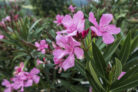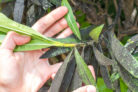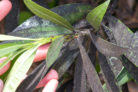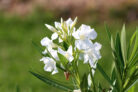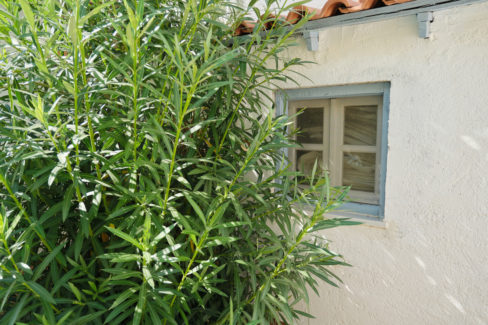
Healthy oleander leaves are usually a beautiful, glossy green, ranging from bright lime to deep forest tones. But if you start noticing brown or black spots popping up on your plant, it’s definitely time to take a closer look. Don’t worry, though—I’ve got you covered. Here’s a breakdown of what those spots might mean and how to fix them.
Common Culprits for Black Spots
If your oleander is sporting dark spots, it’s usually a sign of a disease or a pest problem. The most common offenders are:
- Fungal infections
- Sooty mold (often caused by aphids or scale)
- Oleander knot (also known as oleander gall or cancer)
Fungal Infections
In many cases, those black spots are simply a fungal issue. This usually happens when the leaves stay wet for too long, or if the plant is sitting in high humidity with low temperatures. This is why you’ll often see these spots right after the plant comes out of winter storage. Good airflow is key here!
Sooty Mold and Pests
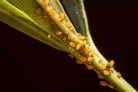
If the black spots look like a layer of soot that you can actually wipe off with your finger, you’re likely dealing with sooty mold. This fungus doesn’t actually attack the plant directly; instead, it feeds on “honeydew”—that sticky, sweet residue left behind by aphids or scale insects.
To get rid of sooty mold, you have to tackle the root of the problem: the bugs. Once you clear up the pest infestation, the mold will lose its food source and disappear.
Oleander Knot (Oleander Cancer)
If the spots start brown and turn black, it could be the early stages of oleander knot. This is caused by a bacterium called *Pseudomonas*. Along with the leaf discoloration, you’ll usually see bumpy, wart-like growths or “cankers” forming on the stems and branches.
How to Handle Oleander Knot
While oleander knot is rarely fatal for the plant, it spreads like wildfire. You’ll want to act fast to keep it from taking over your whole garden.
The best way to beat it is with a hard prune. Don’t be afraid to be aggressive—cut the infected stems back significantly, even down to just a few inches if necessary. Oleanders are incredibly resilient and handle heavy pruning like champs; they’ll bounce back with fresh, healthy growth by next spring.