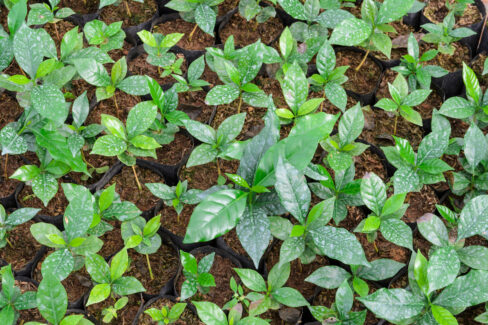
Coffee plants originally hail from tropical and subtropical regions, where they thrive in nutrient-rich soil with just the right acidity. If you’re growing one at home, don’t worry—mixing the perfect potting soil for your coffee plant is actually pretty straightforward!
Start with a Good Potting Soil
The foundation of your mix should be a high-quality, nutrient-rich potting soil. Coffee plants have very delicate root systems, so you’ll want to be extra careful not to damage them when repotting. These plants also hate “wet feet” (standing water), so drainage is key. I recommend mixing in some clay granules to keep the soil airy and permeable.
To take it a step further, add a layer of coarse expanded clay pebbles (LECA) at the very bottom of your pot to act as a drainage layer. Aim for about an inch-thick layer to keep that water moving.
Watch Out for Extra Minerals
Here’s a pro tip: coffee plants are surprisingly sensitive to minerals. They only need them in tiny amounts, so it’s best to skip mineral-based fertilizers entirely. You should also avoid using gravel for drainage or aeration; over time, stones like gravel can release minerals into the soil that might actually harm your plant.
This “low mineral” rule applies to your water, too. Coffee plants aren’t fans of “hard” tap water. If you can, use rainwater to water your coffee plant. If that’s not an option, make sure your water is filtered or low in lime.
Keep it Slightly Acidic
Coffee plants are “acid-loving” plants, meaning they prefer a soil pH between 5.5 and 6.5. You can easily find a pH testing kit at any garden center—just take a small soil sample to see where you stand.
Most standard store-bought potting soils sit around a neutral pH of 7.0. To bring that number down, try mixing in some rhododendron or azalea soil. You can also add leaf humus or bark mulch to the mix. Just keep in mind that bark mulch takes a while to break down and lower the pH, so it’s best used if your soil is already very close to the target range.
Because coffee plants are so sensitive to high pH levels, it’s a good idea to check the soil regularly and adjust as needed—especially if you’ve been using tap water, which tends to make the soil more alkaline over time.