This hardy little perennial has successfully made its way across much of Europe and Asia. Because it’s so pretty, it’s actually managed to build quite a career for itself as an ornamental garden plant. But a word of caution: whether you spot it in your flower bed or out on a wild meadow, you’ll want to keep your distance. There’s a hidden danger lurking behind those bright colors!
Quick Facts: Cypress Spurge
- Botanical Name: Euphorbia cyparissias
- Common Names: Cypress Spurge, Graveyard Weed
- Family: Euphorbiaceae (Spurge family)
- Origin: Europe and Asia, found at altitudes up to 7,500 ft
- Natural Habitat: Dry grasslands, sheep pastures, rocky slopes
- Plant Type: Herbaceous perennial, usually deciduous
- Propagation: Seeds, cuttings, runners, or division
- Height: 6 to 20 inches
- Leaves: Green, needle-like, about 1 inch long
- Flower Color: Starts bright yellow, matures to a reddish hue
- Bloom Time: May through September
- Hardiness: Very cold-hardy
- Toxicity: Highly toxic
- Medicinal Properties: Historically used, but proceed with extreme caution
Note: In some parts of its native range in Germany, Cypress Spurge is losing its natural habitat and is now considered an endangered species.
Growing Cypress Spurge in Your Garden
- Location: Full sun
- Soil: Dry, poor, well-draining, or rocky soil
- Planting Time: Mid-May
- Spacing: 12 inches apart
- Containers: Works well in pots
- Common Diseases: Rust fungi, powdery mildew
- Pests: Aphids, thrips, slugs
- Water & Fertilizer: Generally not necessary; it thrives on neglect!
- Pruning: Trim back spent flower heads
- Winter Care: Provide a light cover in extreme conditions
If you give Cypress Spurge a spot in your yard, you’ll be doing the local ecosystem a favor. It’s a magnet for bees and other pollinators. Plus, it’s the primary food source for the caterpillars of the Leafy Spurge Hawk-moth!
Those “Flowers” Aren’t What They Seem
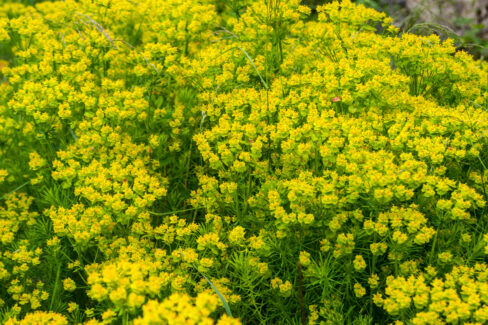
When you look at the tips of the stems, you’ll see what looks like vibrant yellow flowers. However, our eyes are playing a bit of a trick on us! Those yellow parts are actually “bracts” (specialized leaves). The actual flowers are much smaller and sit right on top of those colorful bracts.
Warning: The Sap is Toxic!
Cypress Spurge is classified as moderately to highly toxic. The real danger lies in the milky white sap, which contains substances that are extremely irritating to the skin. This sap leaks out whenever the plant is cut or broken.
Safety Tip: Always wear gloves and long sleeves when handling this plant. You should also wear eye protection—if the sap gets into your eyes, it can cause severe inflammation and, in the worst-case scenarios, even permanent blindness. Handle with care!