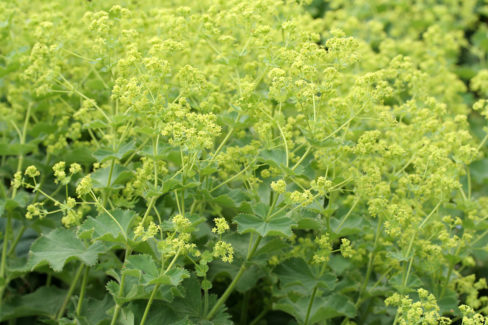
Lady’s Mantle is a member of the rose family that’s famous for its medicinal properties, but let’s be honest—most of us love it because those yellow blooms look absolutely stunning in a flower bed. If you want more of this beauty in your garden without spending a dime, dividing your plants is the way to go. Here’s my step-by-step guide on how to propagate your Lady’s Mantle by division.
When is the best time to divide Lady’s Mantle?
Timing is everything! The sweet spot for dividing these perennials is between February and March. You want to catch the plant while it’s still dormant or just starting to wake up, before it has put energy into new growth.
By the way: If you miss the spring window, don’t sweat it. You can also propagate this rose relative in the fall, right after its flowering period is over.
Getting ready: How to prep your plant
First, grab a spade or a sturdy shovel. Carefully dig up the plant you want to propagate. Be sure to give the root ball plenty of space—it’s better to dig a wider circle than to accidentally slice through the roots.
Once it’s out of the ground, gently shake off the excess dirt or crumble it away with your hands. You want to keep going until the root system is clearly visible so you can see exactly where you’re working.
The main event: Dividing the roots
Now, here’s a pro tip: unlike some other perennials where you can just chop them in half with a shovel, Lady’s Mantle needs a gentler touch. It has delicate fine roots that you really want to protect. Instead of a spade, reach for a sharp knife.
Make sure your knife is clean and disinfected first to prevent any diseases. Then, carefully slice the root system of the mother plant in half. Try to be as precise as possible to keep those tiny feeder roots intact.
Finding the perfect home for your new plants
Before you put the mother plant back and tuck the new baby into its home, give both root systems a quick soak in a bucket of water or a rain barrel. Once they’re hydrated, the mother plant can go right back where she came from.
For your new Lady’s Mantle, look for a spot with full sun to partial shade. These plants love soil that is rich in organic matter (humus), slightly loamy or clay-heavy, and packed with nutrients. Aim for a soil pH that is slightly acidic to neutral.
Expert Tip: If your garden soil is a bit too heavy or doesn’t drain well, just mix some potting soil with a bit of sand to loosen things up!