The Yucca, often called a Spanish Dagger or Adam’s Needle, is usually a tough-as-nails plant. But if yours is starting to look a little sad and shriveled, it might be sending out an SOS. When a Yucca starts failing, you’ve got to move fast to turn things around.
The Root of the Problem
If your Yucca is struggling, it’s probably not just “old age”—these beauties can live for over 50 years! Usually, the culprit is one of three things:
- Improper care
- Disease
- A pest infestation
Care Mistakes
The most common “plant parent” mistakes that lead to a Yucca’s demise are:
- Overwatering (standing water)
- Over-fertilizing
Both of these issues eventually lead to root rot. When the roots rot, the plant can’t “drink” or “eat” anymore, so it literally starves and dehydrates. The tricky part? Root damage happens underground, so you often don’t notice it until the plant is in serious trouble. Keep an eye out for these early warning signs:
- First: Limp, drooping leaves. The Yucca looks thirsty even though you’re watering it.
- Next: Yellow leaves that eventually dry up and die.
If you don’t change your routine, the trunk and stems will turn soft, eventually buckling or snapping off entirely.
Disease or Pests
If a disease or a pest infestation goes unnoticed, the plant will slowly decline. Just like with care mistakes, the leaves are the first to show symptoms. The Yucca gets weaker and weaker until the structure fails and the stems go mushy.
How to Save Your Yucca
Fixing Overwatering & Over-fertilizing
Whether you can save your Yucca depends on how far the rot has spread. If the trunk is still firm and it’s just the leaves looking sad, there’s a good chance some of the roots are still healthy. Here’s your rescue plan:
- Carefully lift the Yucca out of its pot.
- Inspect the roots for rot (mushy, dark, or smelly bits).
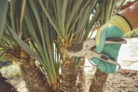
- Trim away any rotten sections with clean shears.
- Rinse the remaining healthy roots under lukewarm water.
- Let them air dry for a bit.
- Repot your Yucca in a fresh pot with brand-new, dry soil.
- Don’t water or fertilize the plant for the next two to three weeks to let it recover.
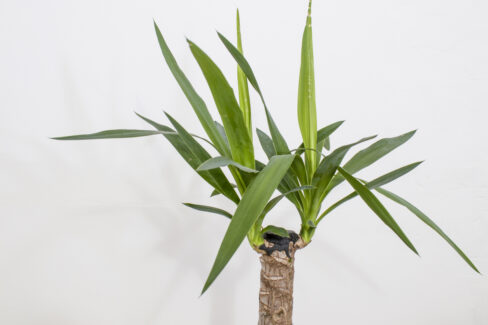
If the trunk is already soft and mushy at the base, the plant as a whole is likely a goner. However, if the top section of the trunk is still firm and healthy, you can saw that part off and start it as a new cutting!
Dealing with Disease or Pests
If your plant is heavily infested or diseased, your best bet is a “radical haircut.” Cut away the affected parts entirely. If there are healthy sections left over, you can try to root those pieces in fresh soil to start over with a clean slate.