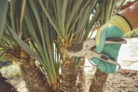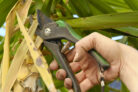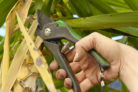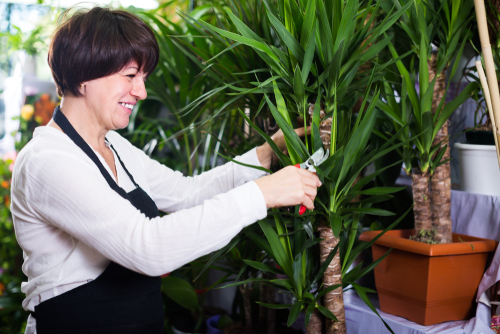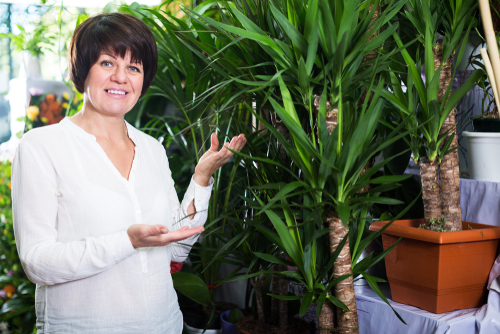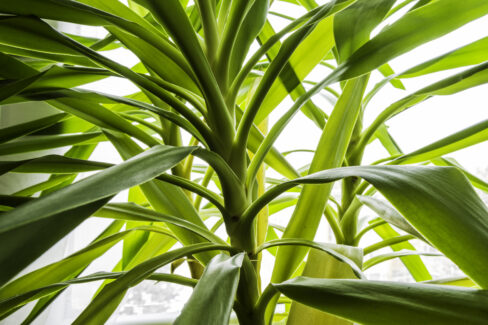
Even though Yuccas aren’t exactly known for being speed demons, the popular Spineless Yucca (bot. *Yucca elephantipes*) can eventually hit your ceiling after a few years. When that happens, you’re probably wondering how on earth to prune it back down to size.
Pruning Your Yucca
When it comes to trimming a Spineless Yucca, you actually have to think a bit backward compared to other plants. With most houseplants, the part staying in the pot is the “main event.” But with this Yucca, the top piece you cut off is actually your prize, because that’s where the beautiful green crown lives. The stump left behind in the original pot is essentially the “leftover.”
Timing is Everything
The best time to give your Yucca a haircut is in the spring, right before its main growing season kicks off. Avoid pruning during its winter dormancy (October through March), as the plant doesn’t handle the stress of a trim nearly as well during its rest period.
Cutting to Your Desired Height
Exactly where you make the cut is totally up to you. However, I usually recommend cutting it back a bit more than you think you need to. This gives the plant plenty of room to grow for several years before you have to do it again—and let’s be honest, the plant doesn’t want to deal with the stress of a major chop every single year!
Planting Your New Yucca
Since the top section you cut off won’t have any roots yet, you’ll need to repot it into a fresh container. Don’t panic if a few leaves at the bottom of the crown start to dry out or turn brown; that’s just the plant’s natural reaction to the “surgery” it just went through.
What About the Rest of the Trunk?
If you ended up with a long trunk that you had to cut into several sections, don’t throw them away! You can plant these as “cane cuttings” in pots with fresh potting soil. The most important thing here is to make sure you plant them facing the same direction they were growing originally (don’t flip them upside down!). You should also seal the top cut end with some candle wax to prevent pests or diseases from moving into the open wound.
As for the original stump left in the pot? Keep it! It will usually start sprouting new growth within a few weeks.
Care and Location
While your new cuttings are busy growing roots, keep them out of direct, harsh sunlight. If you can, find a nice spot in partial shade outdoors. For those first few weeks of care, remember:
- Water moderately.
- If you used fresh soil, hold off on fertilizing for a few weeks.